Finding a lump in the breast or noticing swelling in the neck can cause understandable concern. Yet a lump does not automatically mean cancer, and surgery is not automatically required. Many thyroid nodules and breast lumps are benign.
The purpose of evaluation for thyroid and breast lump surgery in PCMC is therefore to establish what the lump is before deciding whether observation, further testing or surgical treatment is appropriate.
How a Breast Lump Is Evaluated
Breast lumps can develop for many reasons, including cysts and benign solid lesions. Clinical examination helps assess characteristics such as size, mobility and location.
Depending on age and clinical findings, the next steps may include ultrasound, mammography or other breast imaging. A tissue sample may be recommended when the nature of the lump remains uncertain or when imaging identifies features that need further investigation.
This combined approach helps avoid making treatment decisions based on touch alone.
When Might Breast Surgery Be Considered?
Surgical removal may be discussed when a lump is symptomatic, increasing in size, producing concerning clinical or imaging findings, or when tissue diagnosis indicates that surgery is appropriate.
In some benign conditions, observation with follow-up may be sufficient.
Patients should understand both the reason for recommending surgery and what the procedure is expected to establish or treat.
Understanding Thyroid Nodules
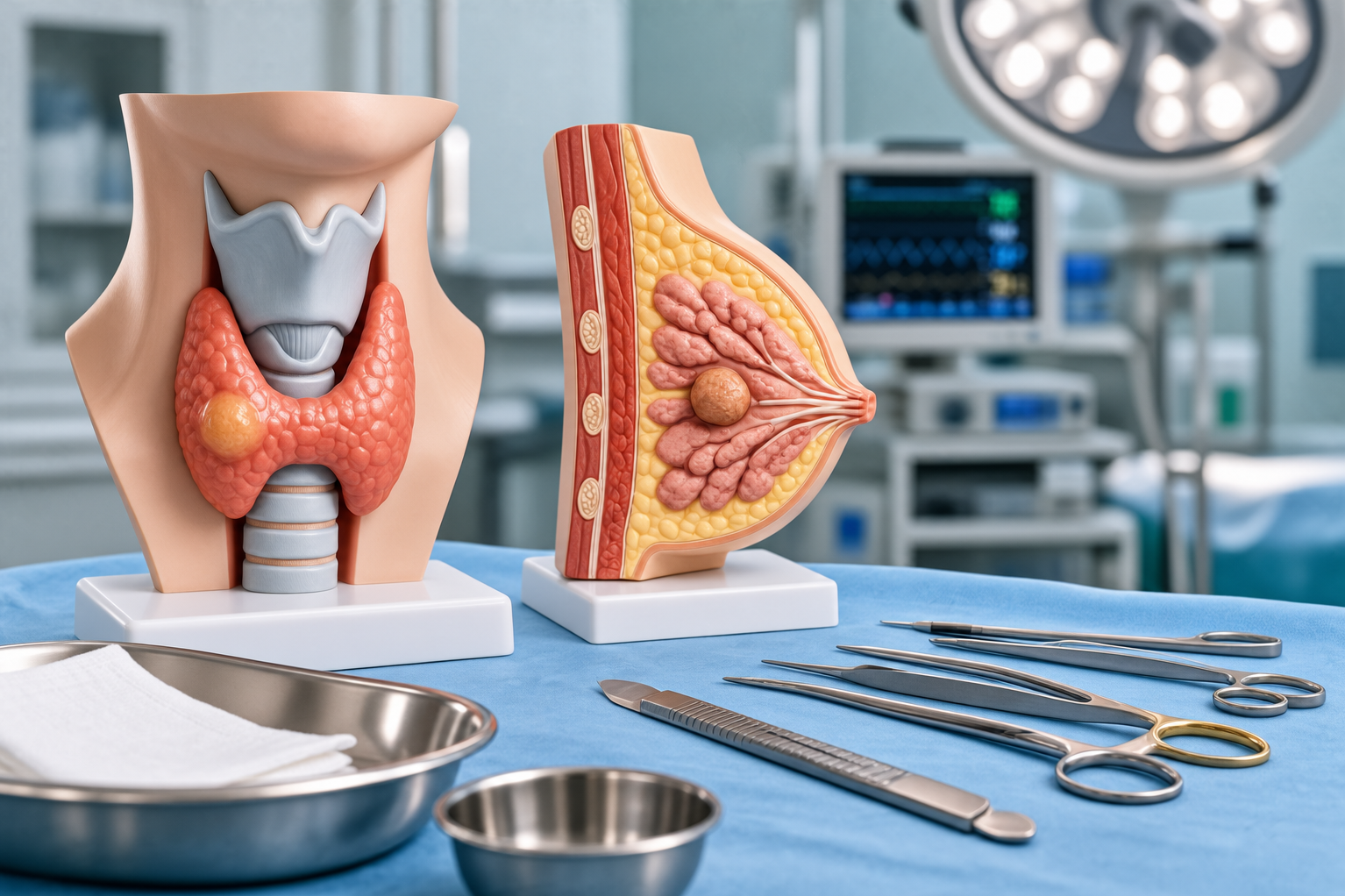
The thyroid gland sits in the lower front of the neck. Nodules within the gland are relatively common and may be discovered during examination or incidentally on imaging.
Evaluation can include:
- Clinical examination
- Thyroid function blood tests
- Ultrasound
- Fine-needle aspiration when indicated
- Additional investigations depending on findings
The size of a thyroid nodule alone does not determine whether surgery is necessary.
When Thyroid Surgery May Be Discussed
Surgery can be considered for different reasons. A thyroid swelling may be causing pressure symptoms, progressively enlarging, producing excessive thyroid hormone in certain situations, or showing features that warrant removal.
The extent of surgery depends on the underlying condition. Some patients may require removal of one thyroid lobe, while others may need a more extensive procedure.
This decision should be based on diagnosis rather than a one-size-fits-all approach.
Warning Signs That Deserve Evaluation
A breast lump that persists, changes noticeably or is accompanied by nipple or skin changes should be medically assessed.
Similarly, a neck swelling that is enlarging or associated with difficulty swallowing, breathing changes or persistent voice alteration deserves evaluation.
These signs do not establish a diagnosis by themselves, but they provide a reason not to postpone assessment.
Choosing Surgical Care in PCMC
Patients in Pimpri Chinchwad, Nigdi, Wakad and surrounding areas of Maharashtra may need several stages of evaluation before a decision about surgery is reached. Access to imaging, pathology and appropriate follow-up therefore matters.
Dr Mahesh B Jadhav provides general surgical assessment for breast lumps and selected thyroid conditions. Consultation focuses on reviewing examination findings and available investigations before discussing whether surgical management is indicated.
The most important principle is simple: investigate first and operate when there is a clear clinical reason. A lump can be worrying, but assumptions based on its presence alone are rarely helpful. A structured assessment provides the information needed to distinguish conditions that can be observed from those that need biopsy, surgery or further specialist management.
Keywords