Severe abdominal pain can require an ambulance, same-day surgical assessment, or a routine appointment, and choosing the wrong level of care can waste critical time. You will learn how to triage symptoms, what tests and operations clinicians consider, why laparoscopy may change to open surgery, and how to prepare for emergency treatment in PCMC.
Key takeaways
- Call an ambulance for collapse, severe breathing trouble, heavy bleeding, or worsening severe pain.
- Go to the emergency department for sudden severe pain, persistent vomiting, fever, or a rigid abdomen.
- Do not eat or drink after emergency advice unless clinicians give different instructions.
- Ask how the surgical plan could change if laparoscopy reveals bleeding, infection, or unexpected disease.
Should you call an ambulance, visit the emergency department, or book an appointment?
For acute abdominal pain in PCMC, use this three-level guide:
- Call an ambulance or go directly to an emergency department for fainting, confusion, collapse, breathing difficulty, severe or rapidly worsening pain, a rigid or markedly tender abdomen, repeated vomiting with inability to keep fluids down, blood in vomit or stool, or fever with worsening tenderness.
- Go directly to an emergency department for a swollen abdomen with inability to pass stool or gas, a suspected strangulated hernia, or abdominal injury with weakness or bleeding. Do not wait for a routine referral.
- Arrange a same-day surgical review for persistent localized pain, new right-lower or right-upper abdominal pain, fever with nausea, a painful irreducible lump, or symptoms worsening without collapse.
- Book a routine appointment only for mild, stable, recurring discomfort without vomiting, fever, progressive tenderness, faintness, or bowel-obstruction symptoms.
While travelling, do not eat or drink unless emergency clinicians instruct you. Do not take laxatives for unexplained severe pain; they can delay assessment when obstruction is possible. Do not drive if you feel faint or severely unwell. Medication decisions, including pain medicines and anticoagulants, must follow clinician advice rather than a blanket rule.
A previous reassuring scan or consultation does not override worsening symptoms.
Which acute conditions can require emergency abdominal surgery?
Perforated appendicitis, acute calculous cholecystitis, bowel obstruction, perforated peptic ulcer, strangulated or obstructed hernia, generalized peritonitis, and selected blunt or penetrating abdominal injuries can require urgent treatment. The intervention may be laparoscopy, open surgery, drainage, bowel resection, or another procedure. Emergency laparoscopy describes the access method, not the diagnosis.
| Condition | Possible emergency treatment | Why delay is dangerous |
|---|---|---|
| Perforated appendicitis | Appendix removal, washout, drainage | Infection can spread through the abdomen |
| Acute cholecystitis | Early gallbladder removal or drainage | Inflammation can progress to necrosis or perforation |
| Bowel obstruction or strangulated hernia | Release, repair, and nonviable bowel resection | Trapped bowel can lose its blood supply |
| Perforated ulcer or peritonitis | Repair, washout, antibiotics, drainage | Contamination can cause sepsis |
| Abdominal injury | Laparoscopy, open control of bleeding, or observation | Internal bleeding or organ damage can worsen |
Assessment combines repeated vital signs with examination for guarding, rigidity, distension, and worsening tenderness. Blood tests include a complete blood count, C-reactive protein, liver tests, pancreatic lipase, urine testing, and pregnancy testing when relevant; serum lactate helps assess shock or suspected bowel ischemia. Ultrasound examines the gallbladder, appendix, fluid, or abscess.
CT of the abdomen and pelvis clarifies obstruction, perforation, injury, and deep infection, while plain abdominal radiography has a limited role in selected obstruction or perforated-ulcer cases. A scan never replaces repeat examination.
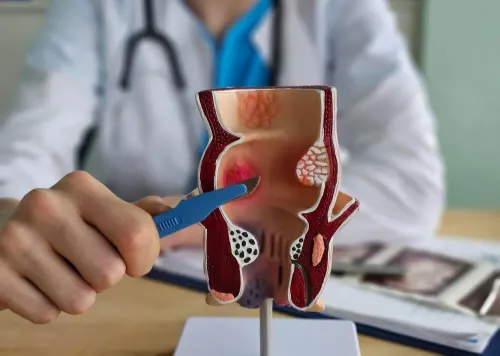
If laparoscopy finds a normal appendix, the surgeon should inspect the small bowel, stomach, gallbladder, pelvis, and other abdominal causes. A deep anorectal abscess is different: it needs focused examination and drainage, sometimes examination under anesthesia, not abdominal access.
What makes emergency laparoscopy different from planned or diagnostic surgery?
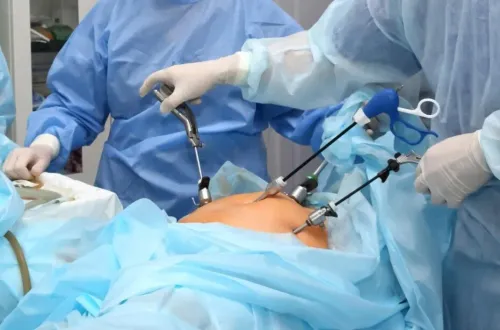
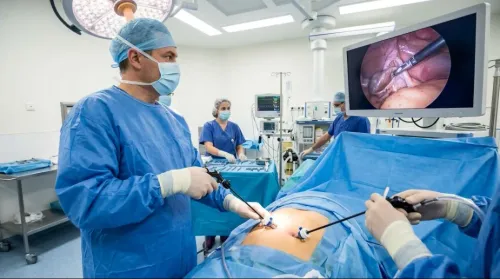
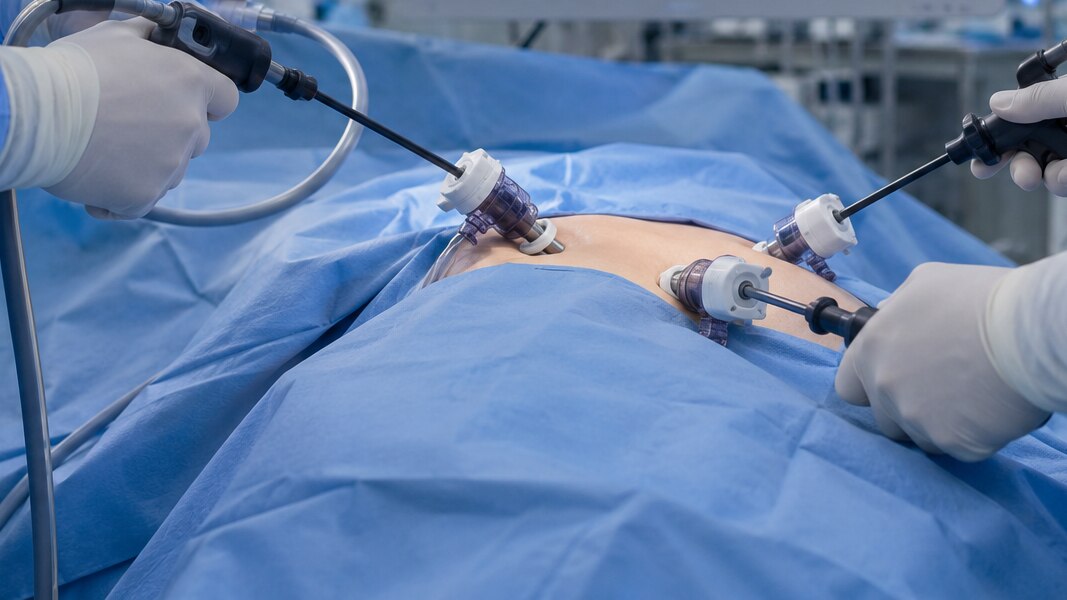
Emergency laparoscopy starts with a problem, not a fixed operation. The camera can identify the cause and allow treatment during the same procedure, but the findings decide whether the surgeon drains infection, removes an organ, repairs a perforation, resects bowel, or stops and changes approach.
| Option | Main purpose | What can change |
|---|---|---|
| Diagnostic laparoscopy | Inspect the abdomen and clarify an uncertain diagnosis | Treatment may follow if the cause is found |
| Planned gallbladder surgery | Remove the gallbladder under controlled conditions | Acute inflammation can require subtotal cholecystectomy, drainage, or conversion to open surgery |
| Planned hernia repair | Close the defect, often with mesh | Obstruction or strangulation may require bowel resection; contamination can rule out mesh |
| Emergency laparoscopy | Diagnose and treat an acute condition in one operation | Severe inflammation, adhesions, bleeding, or poor visibility can require conversion to open surgery |
| Open emergency surgery | Provide rapid, wide access for control of danger | It may be safer for shock, peritonitis, or damage-control treatment |
For a fit patient with acute calculous cholecystitis, early laparoscopic cholecystectomy is usually considered during the same admission. Severe inflammation, edema, adhesions, or unclear anatomy make forceful dissection dangerous. A subtotal operation, drainage, or conversion to open surgery protects against bile-duct injury.
With an obstructed or strangulated hernia, bowel viability determines whether resection is needed. Mesh is not automatic when perforation, gross contamination, or infected tissue is present.
Shock, generalized peritonitis, major bleeding, extensive adhesions, advanced pregnancy, unstable heart or lung disease, inability to tolerate pneumoperitoneum, or limited visibility can make open emergency surgery safer. Laparoscopic abdominal surgery does not treat a compressed airway from a thyroid mass; that requires urgent airway assessment.
What should you and your family prepare before emergency surgery?
Emergency surgery rewards speed, but missing information can create avoidable delays. Bring what you can without postponing transfer: clinicians may need emergency surgery consent before the exact diagnosis is certain.
Consent may cover laparoscopy, conversion to open surgery, bowel resection, drains, stoma formation, and blood transfusion. These options protect you when the operation reveals perforation, dead bowel, severe contamination, or uncontrolled bleeding.
Give the team:
- A current medicine list or photographs of medicine strips, especially anticoagulants and antiplatelet drugs; these affect bleeding risk and reversal decisions.
- Allergies, diabetes, heart or lung disease; these guide antibiotic choice, anesthesia, glucose control, and monitoring.
- Previous abdominal operations; scars and adhesions can change port placement and the safest access route.
- Pregnancy possibility and the last food or drink; these affect anesthesia, contrast imaging, and the timing of surgery.
- Medical records, imaging discs or reports, and recent laboratory results; they prevent repeated tests and help interpret CT, ultrasound, blood counts, kidney function, and clotting results.
Do not delay urgent treatment while searching for paperwork. A capable service needs more than a “laparoscopic” label:
| Requirement | Why it matters |
|---|---|
| 24-hour anesthesia and CT/ultrasound | Safe assessment and rapid surgery |
| Blood bank and intensive-care backup | Support for bleeding or organ failure |
| Urgent endoscopy or interventional radiology | Treat selected bleeding, obstruction, or collections |
| Surgeon able to convert to open surgery or resect bowel | Safe treatment when keyhole access is unsuitable |
For PCMC surgical care, ask these questions directly when contacting Dr Mahesh B Jadhav instead of choosing a facility based only on advertised keyhole surgery.
Related services
Surgical Care Laparoscopic Gall Bladder Surgeries ₹600 we provide comprehensive laparoscopic care opd consultation..and further line of action from initial consultatation till discharge and post procedure... View service → |
Surgical care ₹600 Laparoscopic hernia repair is a minimally invasive procedure used to treat inguinal, umbilical, ventral, incisional and selected recurrent hernias. View service → |
What decisions can change during the operation?
The operation can change when the surgeon sees a danger that scans could not show clearly. Starting with laparoscopy and converting to an open operation is a safety decision, not a failed laparoscopic operation.
1. If anatomy is unclear, bleeding cannot be controlled safely, malignancy is suspected, or inflammation and adhesions block progress, the surgeon may use a larger incision for direct access.
2. If pus or bowel contents have spread, treatment may include washing out peritonitis, repairing a perforation, and placing surgical drains to remove infected fluid.
3. The team may remove an inflamed appendix or gallbladder, release an obstruction, or perform a bowel resection when bowel is nonviable.
4. Severe bowel damage or contamination may require stoma formation. The stoma may be temporary while tissues heal or permanent when safe reconnection is not possible.
5. Shock, major infection, or complex surgery may require intensive-care treatment after the operation, including ventilation, blood-pressure support, or further procedures.
A normal-looking appendix does not end the search for the pain source. The surgeon may inspect the pelvis, small bowel, stomach, gallbladder, and other structures before deciding what requires treatment.
Seek emergency assessment for worsening pain, guarding, persistent vomiting, fainting, confusion, fever with tenderness, or inability to pass stool or gas—even after an earlier reassuring test or consultation.
Frequently asked questions
Should you call an ambulance, visit the emergency department, or book an appointment?
Call an ambulance for collapse, breathing difficulty, heavy bleeding, confusion, or severe worsening pain. Visit the emergency department for sudden severe pain, repeated vomiting, fever, faintness, or a rigid or swollen abdomen. Book an appointment for stable, recurring symptoms without emergency warning signs.
Which acute conditions can require emergency abdominal surgery?
Appendicitis, perforated ulcers or bowel, bowel obstruction, strangulated hernias, gallbladder infection, internal bleeding, and some abdominal injuries can require urgent surgery.
What makes emergency laparoscopy different from planned or diagnostic surgery?
Emergency laparoscopy is organised under time pressure, after rapid examination, blood tests, imaging, anaesthesia review, and consent for possible changes. The surgeon may treat the cause immediately or convert to open surgery when that is safer.
What should you and your family prepare before emergency surgery?
Bring identification, medication and allergy details, prior operation records, scan reports, and an emergency contact. Tell clinicians when you last ate or drank and do not delay care to collect documents.
What decisions can change during the operation?
The surgeon may remove an inflamed organ, repair a perforation or hernia, control bleeding, wash out infection, or convert to open surgery. The findings, bleeding, anatomy, and safety of key organs guide these decisions.