Laser treatment is not a single operation, and the word “laser” does not determine whether it suits your hemorrhoid grade, symptoms or anatomy. By the end, you will know when fibre and office treatment are enough, what examination is needed before a procedure, which technique a clinic is proposing, and what recovery involves.
Key takeaways
- Laser treatment suits selected Grade II and III internal hemorrhoids.
- Confirm the diagnosis, prolapse grade, bleeding cause, and treatment plan first.
- Compare recovery, recurrence, anaesthesia, and risks—not just the word laser.
- Ask who performs the procedure, what it costs, and when you can resume work.
Which hemorrhoid grades are suitable for laser treatment?
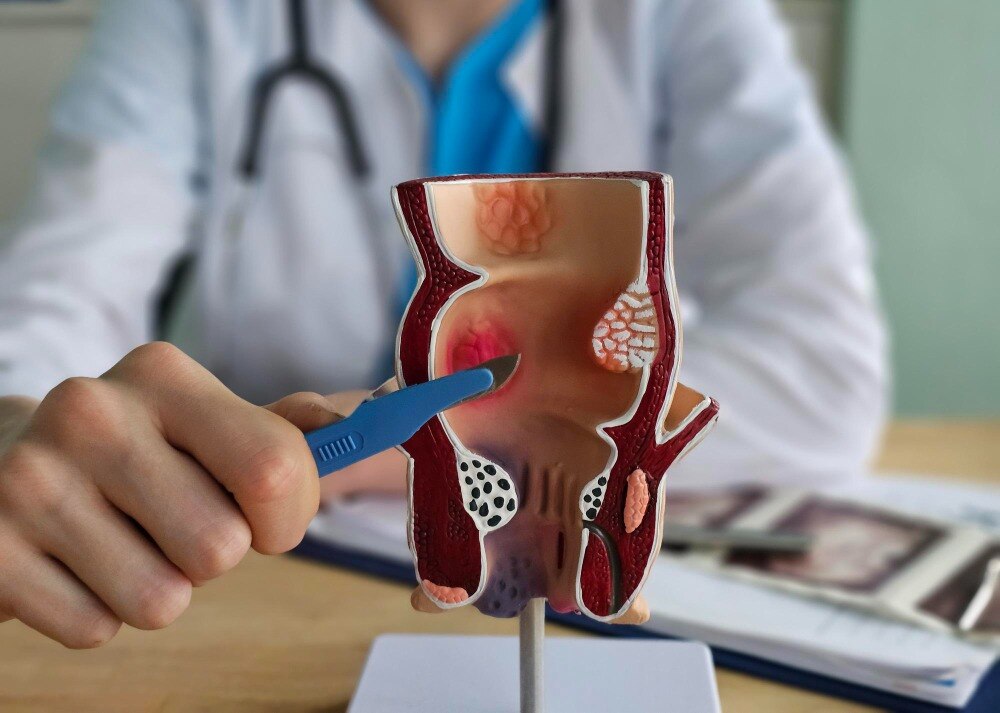
Hemorrhoid grades are classified by how far internal hemorrhoidal tissue prolapses, not by pain alone. Grade I hemorrhoids remain inside the anal canal; Grade II hemorrhoids come out during straining but return without help; Grade III hemorrhoids require finger reduction; Grade IV hemorrhoids stay prolapsed and cannot be pushed back.
| Grade | What the grade means | Usual treatment direction |
|---|---|---|
| Grade I | No prolapse; bleeding or irritation may occur | Fibre, fluids, constipation control; office treatment if symptoms persist |
| Grade II | Prolapse with straining, then spontaneous reduction | Bowel-habit changes, rubber-band ligation, or selected laser treatment |
| Grade III | Prolapse needs manual reduction | Individual assessment; laser may suit selected internal disease, while surgery may be more definitive |
| Grade IV | Permanently prolapsed and irreducible | Conventional surgery is often considered, especially with bulky or external tissue |
Laser treatment fits best when persistent bleeding or internal prolapse continues despite fibre, adequate fluids, avoiding straining, and limiting toilet sitting. Laser hemorrhoidoplasty is more relevant to selected internal hemorrhoids than to a painful external lump. “Laser treatment” could also mean laser hemorrhoidectomy, so ask for the exact technique and intended endpoint.
Grade I symptoms often improve without a procedure, and Grade II disease frequently responds to rubber-band ligation, an established office treatment. Severe pain, a large external component, thrombosis, or mixed internal-and-external prolapse requires a different assessment rather than assuming laser is suitable.
What must be confirmed before choosing a laser procedure?
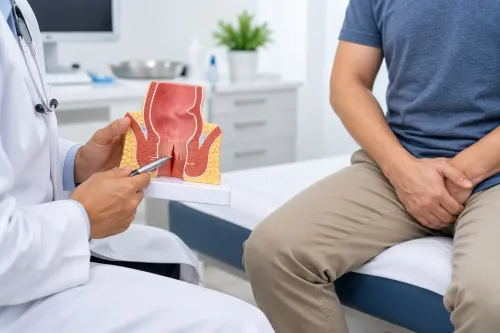
Bright-red bleeding does not prove hemorrhoids. A proper hemorrhoid diagnosis starts with your bleeding pattern, pain, discharge, prolapse, bowel habits and medical history, followed by inspection, a digital rectal examination and anoscopy when appropriate. These steps identify internal hemorrhoids, external lumps, thrombosis and prolapse.
The clinician must also assess other causes before recommending laser treatment:
- An anal fissure, which usually causes sharp pain during or after a bowel movement.
- A fistula or abscess, suggested by pus, a skin opening, fever, persistent swelling or severe tenderness.
- Rectal prolapse, where rectal tissue—not only hemorrhoidal tissue—protrudes.
- Inflammatory bowel disease, particularly with diarrhoea, mucus, abdominal pain or repeated bleeding.
- Polyps or colorectal cancer, especially with anaemia, weight loss, altered bowel habits, unexplained or recurrent bleeding.
Colonoscopy is not automatic for every patient, but age, screening status, family history, anaemia and the bleeding pattern can make colon evaluation necessary. Do not accept “laser” as the procedure name; confirm exactly what will be treated.
| Procedure | What it means | What it addresses |
|---|---|---|
| Laser hemorrhoidoplasty | A fibre delivers laser energy inside internal hemorrhoidal cushions to reduce blood flow and shrink tissue | Mainly internal hemorrhoids; it does not automatically remove a large external component |
| Laser hemorrhoidectomy | Laser instruments excise hemorrhoidal tissue | Selected bulky, prolapsing or mixed disease; ask how much external tissue will be removed |
The consultation should document the examination findings, grade, target tissue, alternatives and a written recovery plan.
How does laser treatment compare with other hemorrhoid procedures?
Laser hemorrhoidoplasty reduces the size and blood flow of internal hemorrhoids while preserving more anoderm than excisional surgery. It often causes less early pain, but it will not reliably remove a large external lump or correct fixed, advanced prolapse.
| Option | Main advantage | Main limitation or usual fit |
|---|---|---|
| Laser hemorrhoidoplasty | Tissue-preserving treatment for selected internal hemorrhoids | Does not reliably treat bulky external disease or advanced fixed prolapse |
| Laser hemorrhoidectomy | Laser-assisted removal of hemorrhoidal tissue | Recovery still involves a wound, pain and bleeding; suitability depends on the tissue being removed |
| Rubber-band ligation | Quick office treatment for suitable internal Grade I–II and selected Grade III hemorrhoids | Does not treat external lumps and is unsuitable when pain comes from another condition |
| Sclerotherapy | Injection shrinks small bleeding internal hemorrhoids | Less useful for bulky prolapse or substantial external disease |
| Infrared coagulation | Office-based coagulation for small bleeding internal hemorrhoids | Often requires repeat treatment and does not remove prolapsing tissue |
| Conventional hemorrhoidectomy | Most definitive removal of large mixed internal-external disease | More early pain, wound care and recovery time |
| Stapled hemorrhoidopexy | Reduces mucosal prolapse with less early pain than excision | Does not remove external disease and has more recurrent prolapse than excisional hemorrhoidectomy |
| Doppler-guided hemorrhoidal artery ligation | Locates and ties feeding arteries, sometimes with mucopexy | Less suitable for bulky external tissue or advanced prolapse |
Choose a different operation when thrombosis, infection, abscess, severe bleeding or a large external component is present. Fever, escalating pain, heavy bleeding, urinary retention or rapidly worsening swelling requires urgent assessment before any elective laser procedure.
What happens during laser treatment and recovery?
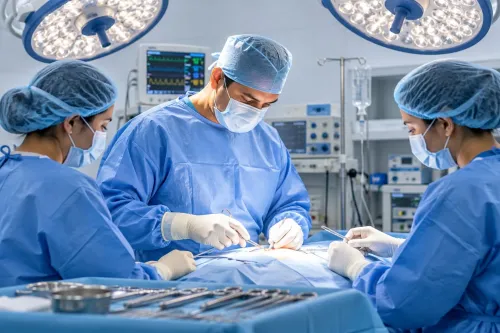
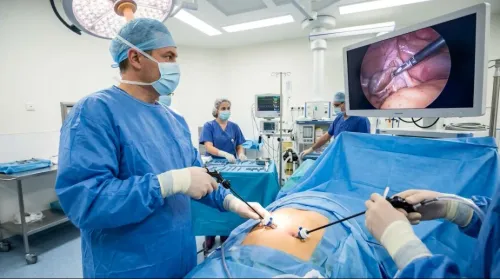
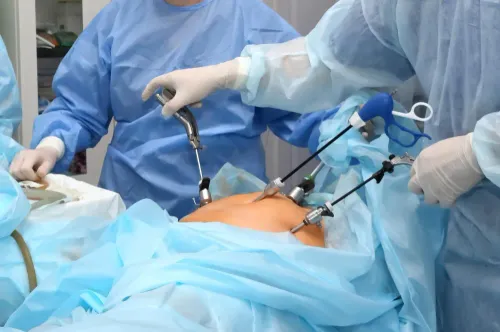
The exact technique determines what recovery feels like. Laser hemorrhoidoplasty uses a laser fibre beneath the lining to shrink internal hemorrhoidal cushions and reduce their blood flow; laser hemorrhoidectomy removes tissue. Ask which operation is planned, because “laser piles procedure” does not name one standard treatment.
1. You receive anaesthesia—local anaesthesia with sedation, spinal anaesthesia, or general anaesthesia—based on the operation and your health. You lie in a lithotomy or prone position while the surgeon examines the anal canal.
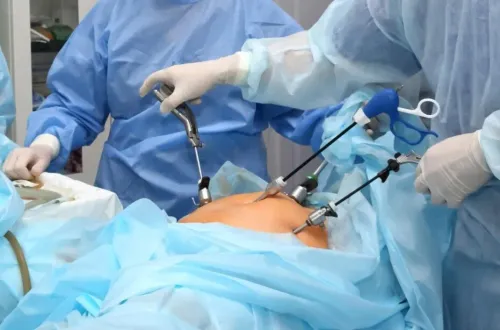
2. For laser hemorrhoidoplasty, the surgeon makes a tiny entry point and guides the laser fibre into each targeted hemorrhoidal cushion. Controlled energy seals small vessels, reduces blood flow and contracts tissue without excising most of the anoderm.
3. The treatment often takes about 20–40 minutes, although combined procedures take longer. After observation until you are alert, urinating and comfortable, most patients leave the same day with an escort.
4. Expect soreness, pressure, mild swelling and a small amount of bleeding, especially with the first bowel movements. Take prescribed pain relief, drink fluids, use the recommended fibre or stool-softening plan, and do not strain or sit on the toilet for long periods.
5. Keep the area clean with water, pat it dry, and take warm sitz baths if advised. Sit for short periods, return to desk work when walking and sitting are comfortable, and postpone strenuous lifting, cycling and intense exercise until your surgeon clears them.
6. Contact the surgeon for heavy or persistent bleeding, fever, worsening swelling, pus, inability to urinate, severe pain, dizziness or repeated vomiting. These are not routine hemorrhoid recovery symptoms.
What should you ask a Pune surgeon before booking treatment?
Leave the consultation with an exact operation name, not the word “laser” alone. Your surgeon should record the examination findings, hemorrhoid grade, whether disease is internal, external or both, and why laser piles treatment in Pune suits you better than fibre treatment, an office procedure or conventional surgery.
1. Ask what to eat and drink before and after the procedure. Confirm your daily fibre target, fluid plan, constipation-prevention steps and whether a stool softener or laxative is needed.
2. Request a written pain plan naming each medicine, dose and timing. Ask how to manage pain during bowel movements and which medicines to avoid if you have kidney, stomach or bleeding risks.
3. Tell the surgeon about aspirin, clopidogrel, ticagrelor, warfarin and other antiplatelet medicines. Never stop them yourself; ask whether the prescriber and surgeon need to coordinate a safe interruption or continuation.
4. Ask what bleeding, swelling and bowel changes are expected, which warning signs need urgent review, and when your first hemorrhoid follow-up will occur.
5. Ask how recurrence will be handled. The plan should explain whether future symptoms would require bowel-habit changes, an office treatment, repeat laser treatment or another operation.
At a consultation with Dr Mahesh B Jadhav, use these questions to test whether the proposed hemorrhoid treatment plan is individualised and documented, including alternatives, written aftercare, recovery restrictions and a clear follow-up route.
Related service
Piles Fissure Fistula Pilonidal Sinus ₹600 we provide comprehensive consultation for pile,fissure and fistula treatment View service → |
Frequently asked questions
Which hemorrhoid grades are suitable for laser treatment?
Laser treatment is usually considered for selected Grade II and Grade III internal hemorrhoids after examination. Grade I disease often responds to diet, fibre, fluids, and medicines, while Grade IV prolapse may need a different operation.
What must be confirmed before choosing a laser procedure?
Confirm that hemorrhoids are causing the symptoms, identify the grade and internal or external components, assess unexplained bleeding, and obtain a clear plan for anaesthesia, risks, recurrence, follow-up, and total cost.
How does laser treatment compare with other hemorrhoid procedures?
Compare laser treatment with rubber-band ligation, sclerotherapy, Doppler-guided procedures, and hemorrhoidectomy by grade suitability, pain, recovery time, recurrence risk, anaesthesia, and whether external prolapse is treated.
What happens during laser treatment and recovery?
The surgeon examines the area, applies anaesthesia, delivers laser energy to shrink targeted hemorrhoidal tissue, and provides discharge and follow-up instructions. Recovery depends on the procedure and your condition, so confirm work, exercise, bowel-movement, and warning-sign guidance before booking.
What should you ask a Pune surgeon before booking treatment?
Ask about the confirmed diagnosis and grade, why laser is recommended, alternatives, the surgeon’s experience with the procedure, anaesthesia, total fees, follow-up, expected recovery, recurrence, and symptoms requiring urgent review.