
A surgical problem is not always a straightforward choice between booking a clinic visit and going to the emergency department. By the end, you will know which symptoms need urgent hospital assessment, how planned surgery is evaluated and authorised, what questions to ask, and how to compare a Nigdi consultation with the hospital facilities needed for safe treatment.
Key takeaways
- Seek emergency care for severe pain, repeated vomiting, fainting, or a rigid abdomen.
- Bring scans, blood-test reports, medication details, allergies, and past operation records.
- Ask why open, laparoscopic, or robotic surgery suits your specific condition.
- Confirm fasting, medicines, transport, wound care, and follow-up instructions before admission.
What a general surgeon in Nigdi can assess—and when another specialist is more appropriate
A general surgeon in Nigdi can assess appendicitis, gallbladder stones, hernias, hemorrhoids, thyroid lumps, abscesses and soft-tissue infections, bowel conditions, and wound problems. The first visit distinguishes a condition needing surgery from one better managed with medicines, observation, or another specialist.
| Condition | What the surgeon assesses | When another route is better |
|---|---|---|
| Appendicitis or gallbladder inflammation | Examination, blood tests, ultrasound or CT, and whether laparoscopic treatment is safe | Go to an emergency department for severe or worsening pain, repeated vomiting, fever, or a rigid abdomen |
| Thyroid lump | Thyroid-stimulating-hormone testing, ultrasound features, and ultrasound-guided fine-needle aspiration when indicated | An endocrinologist or head-and-neck specialist may lead care for hormone disorders or suspected thyroid cancer |
| Groin hernia | Whether it is reducible, enlarging, painful, or obstructing the bowel | A painful lump that will not go back in, with vomiting or abdominal distension, needs emergency care |
| Hemorrhoids | Fiber and bowel-habit changes, office treatment, or surgery according to grade and prolapse | Rectal bleeding with dizziness, black stool, or uncertain cause needs urgent assessment; a gastroenterologist may investigate the bowel |
| Abscesses and soft-tissue infections | Drainage, antibiotics, and the depth or spread of infection | Rapidly spreading redness, swelling, severe pain, fever, or weakness requires emergency assessment |
Go to an emergency department rather than a routine clinic for blood in vomit or stool, fainting, inability to pass stool or gas, jaundice with pain or fever, or rapidly spreading redness and swelling. Call an ambulance if you are faint, confused, breathless, or too unwell to travel safely.
How planned surgical care moves from consultation to a safe operation
After booking, planned surgical care begins with a consultation that confirms the diagnosis and asks whether surgery offers more benefit than observation, medication or another procedure. The surgeon reviews your symptoms, examination findings, scans and treatment goals.
A palpable thyroid lump alone does not settle the decision: thyroid-stimulating-hormone testing, ultrasound features and, when indicated, ultrasound-guided fine-needle aspiration help determine surveillance, lobectomy or total thyroidectomy.
1. The team records previous operations, allergies, heart or lung disease, diabetes control and possible pregnancy where relevant.
2. Tell the surgeon about every medicine, including warfarin, apixaban, aspirin and clopidogrel. Do not stop an anticoagulant or antiplatelet drug yourself; the plan depends on the operation and your clotting risk.
3. Blood work may include a complete blood count and kidney and liver function tests. Additional tests, such as an electrocardiogram or chest assessment, depend on your health and the planned operation.
4. During the pre-anaesthesia assessment, an anaesthesia professional reviews your medical history, airway, fasting instructions and anaesthetic risks, then confirms whether you are ready for admission.
5. You receive an explanation of the proposed operation, alternatives, likely recovery and specific risks before giving consent. Thyroid surgery requires discussion of recurrent-laryngeal-nerve injury, low calcium and possible lifelong thyroid-hormone replacement.
6. On admission, the team verifies your identity, operation and consent before surgery; after monitoring, pain control and discharge instructions, follow-up checks healing and results.
A safe decision can include delaying surgery to correct anaemia or improve diabetes control. If the findings change, the team should explain why the operation, timing or approach must change before proceeding.
Emergency surgical symptoms, first steps and the right place to go
Severe or worsening abdominal pain needs immediate hospital assessment, especially with a rigid or swollen abdomen, repeated vomiting, high fever, fainting, blood in vomit or stool, jaundice, or inability to pass stool or gas.
A painful irreducible hernia, rapidly spreading redness and swelling, and bowel obstruction symptoms also require emergency surgical care, not a routine clinic appointment.
While waiting for transport:
- Do not eat or drink unless emergency staff instruct you to; an operation or anaesthesia may be needed.
- Do not take laxatives or try to force a hernia back through the skin.
- Keep your medicines, allergies, medical records and identification ready.
- Do not drive if you feel faint, confused, severely weak or short of breath.
| Situation | Safer next step | Why |
|---|---|---|
| Symptoms are painful but you are alert, breathing normally and able to walk | Have another adult take you directly to a hospital emergency department | You need examination, blood tests and imaging without clinic delay |
| Fainting, confusion, severe weakness, breathing difficulty or uncontrolled vomiting | Call an ambulance | Paramedics can monitor you and treat deterioration during transport |
| A painful irreducible hernia, rigid abdomen or rapidly increasing distension | Call an ambulance or use emergency transport | Entrapped bowel can lose its blood supply before you reach care |
Call the hospital while travelling if you can, but do not postpone departure to complete a clinic appointment.
Open, laparoscopic and robotic surgery: choosing the safer approach
The safest approach depends on the disease, your fitness for anaesthesia, previous operations and the team’s equipment—not on incision size alone.
| Approach | Suitability and equipment | Recovery, cost and risk |
|---|---|---|
| Open surgery | Direct access through a larger incision; useful for extensive infection, major bleeding, complex anatomy or unstable patients. | More wound pain and a longer recovery are common. It usually costs less than robotic surgery but carries greater wound-related risk. |
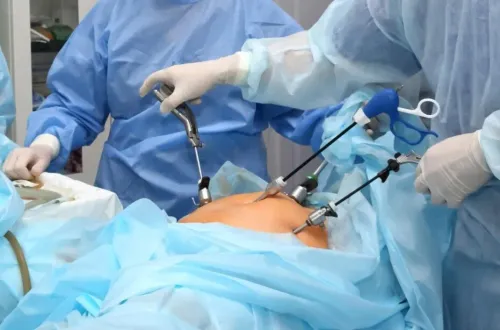
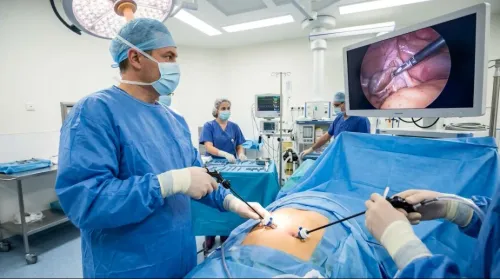
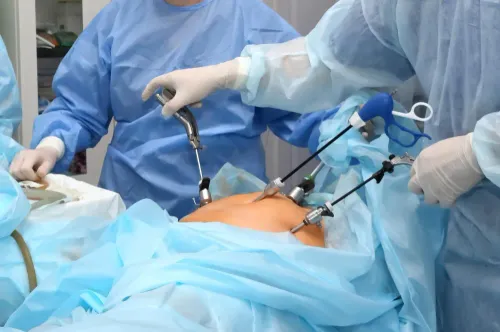
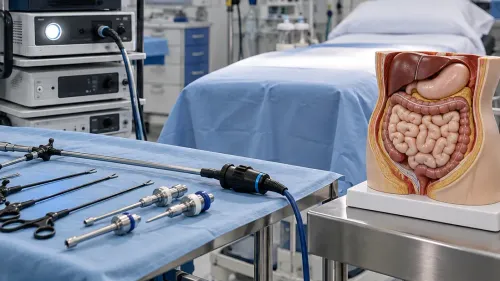
| Laparoscopic surgery | Uses a camera and long instruments through small incisions; widely used for gallbladder, appendix and selected hernia operations. | Often means less pain and a shorter hospital stay, but requires general anaesthesia and specialised equipment. Internal injury, bleeding and anaesthetic complications remain possible. |
| Robotic surgery | A surgeon controls wristed instruments from a console; useful for selected operations needing precise dissection, where the platform and trained team are available. | Recovery can resemble laparoscopic surgery, but operating time and patient charges are often higher. The robot does not remove surgical risk or replace clinical judgement. |
Minimally invasive surgery is not the best choice when you are unstable, bleeding heavily, have widespread infection, severe adhesions or anatomy that cannot be identified safely. Equipment failure or suspected organ injury can also change the plan.
The surgeon may recommend conversion to open surgery if bleeding occurs, adhesions prevent safe progress, cancer is suspected or the anatomy is unclear. Conversion to open surgery is a safety decision, not automatically a complication or failed operation. Ask which approach is planned, what could change it and how the hospital handles each option.
Questions, documents and practical arrangements before and after surgery
Before signing surgical consent, ask the surgeon to name the operation, body side, expected benefit, alternatives, anaesthesia plan and situations requiring conversion from laparoscopic to open surgery. Ask who will operate, where it will happen, expected hospital stay and what happens if you postpone.
- Carry prescriptions, allergy details, previous operation notes, blood-test and imaging reports, identification, policy card and employer documents. Give the complete medicine list, including aspirin, clopidogrel, warfarin, diabetes drugs and supplements; never stop anticoagulants independently.
- Confirm the hospital admission date, reporting time, fasting instructions, pre-anaesthesia tests, deposit, bed type, pathology arrangements and the responsible contact number. Ask whether insurance pre-authorisation is approved, which documents the insurer still needs and which expenses are excluded.
- Arrange an adult to take you home and stay with you after discharge, transport for follow-up, approved leave from work and help with meals, bathing, children or pets. Prepare loose clothing, prescribed medicines and a clear walking path at home.
- Before discharge, obtain written wound-care, bathing, diet, activity, pain-medicine and follow-up instructions. Keep the discharge summary and operative report.
Dr Mahesh B Jadhav can help clarify whether the proposed procedure, its approach and its recovery plan match your diagnosis and medical history.
During post-operative recovery, contact the hospital urgently for worsening pain, repeated vomiting, fainting, breathlessness, confusion, heavy bleeding, inability to pass urine, fever with increasing redness or pus, wound separation, jaundice, or a swollen painful abdomen. Seek emergency care for severe pain, rigid abdomen or sudden collapse.
Related services
Surgical Care Laparoscopic Gall Bladder Surgeries ₹600 we provide comprehensive laparoscopic care opd consultation..and further line of action from initial consultatation till discharge and post procedure... View service → |
Surgical Care ₹600 Robotic surgery is a minimally invasive technique used across many specialties. View service → |
Frequently asked questions
What conditions can a general surgeon in Nigdi assess?
A general surgeon can assess appendicitis, gallbladder stones, hernias, hemorrhoids, thyroid lumps, abscesses, soft-tissue infections, bowel conditions, and wound problems. They can identify cases suitable for surgery, medical treatment, observation, or referral to another specialist.
How does planned surgical care progress from consultation to operation?
The process usually includes an examination, review of scans and blood tests, diagnosis, discussion of treatment choices, preoperative assessment, consent, fasting and medication instructions, admission, surgery, and recovery planning.
Which symptoms require emergency surgical assessment?
Seek urgent assessment for severe or worsening abdominal pain, repeated vomiting, fainting, a rigid or swollen abdomen, heavy bleeding, a painful trapped hernia, or fever with rapidly spreading redness or swelling.
How do open, laparoscopic, and robotic surgery differ?
Open surgery uses a larger incision, laparoscopic surgery uses small incisions and a camera, and robotic surgery uses robotic instruments controlled by the surgeon. The safest approach depends on the condition, previous operations, anatomy, urgency, and surgical findings.
What should you take to a surgical consultation?
Take scan and blood-test reports, medication and allergy details, previous operation records, relevant medical history, and a list of your questions. Arrange transport and home support before surgery when recovery may limit driving or lifting.
Related services
Surgical care ₹600 Laparoscopic hernia repair is a minimally invasive procedure used to treat inguinal, umbilical, ventral, incisional and selected recurrent hernias. View service → |
Piles Fissure Fistula Pilonidal Sinus ₹600 we provide comprehensive consultation for pile,fissure and fistula treatment View service → |