Persistent abdominal pain can be difficult to diagnose because the abdomen contains multiple organs and several conditions can produce overlapping symptoms. Blood tests, ultrasound, CT scans and other investigations identify many causes, but occasionally symptoms remain unexplained despite appropriate evaluation.
In selected cases, diagnostic laparoscopy for abdominal pain in Pune may be considered to directly inspect the abdominal and pelvic cavity.
What Is Diagnostic Laparoscopy?
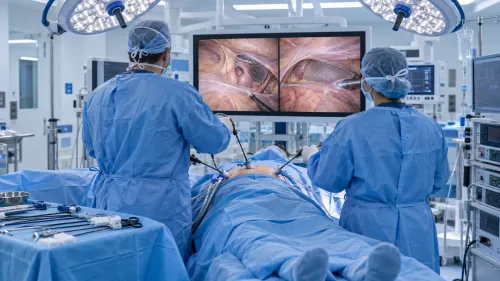
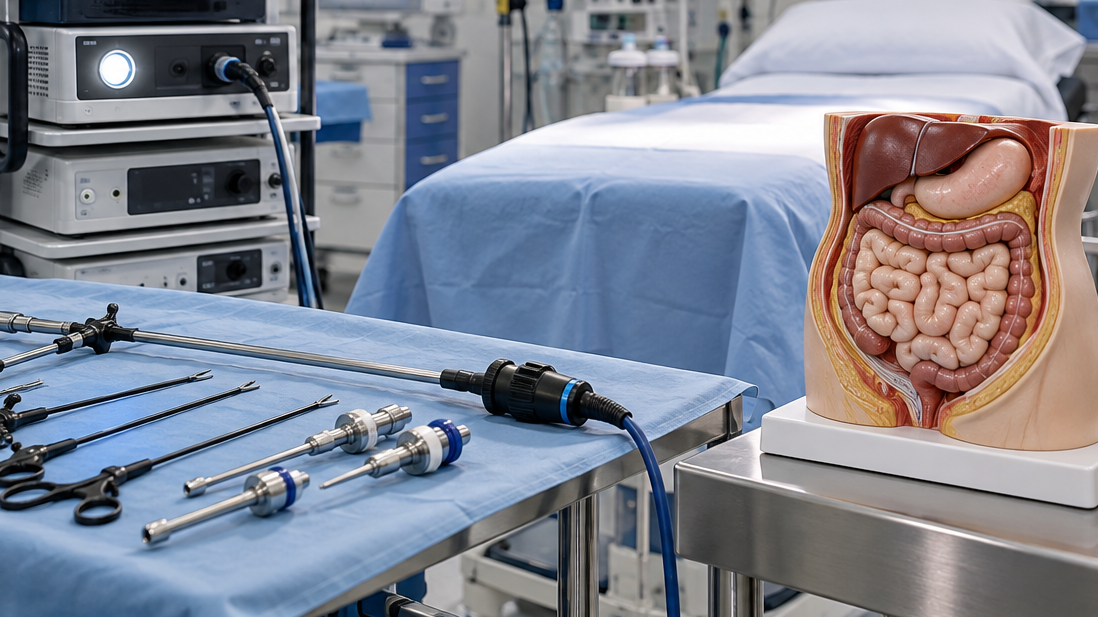
Diagnostic laparoscopy is a minimally invasive surgical procedure performed using a laparoscope, which is a thin instrument containing a camera.
Through a small incision, the surgeon introduces the laparoscope into the abdomen and views internal structures on a monitor. Additional small ports may be used when tissue sampling or another procedure is required.
Unlike ultrasound or CT, laparoscopy allows direct visual examination of accessible internal surfaces and organs.
Is It the First Test for Abdominal Pain?
Usually not.
Most abdominal pain is initially investigated using history, physical examination and non-invasive testing. Depending on symptoms, this can include:
- Blood and urine tests
- Abdominal ultrasound
- CT or MRI
- Endoscopy
- Stool investigations
- Specialist evaluation
Diagnostic laparoscopy is generally considered only when there is a clinical reason for direct examination or when less invasive investigations have not adequately answered an important diagnostic question.
What Can Laparoscopy Potentially Identify?
Depending on the clinical context, laparoscopy may help identify certain adhesions, inflammatory changes, internal abnormalities or other conditions that may not have been fully characterised through previous testing.
The exact usefulness depends heavily on the suspected diagnosis.
It is equally important to understand that laparoscopy does not guarantee that a cause will be found. Some types of abdominal pain can occur without visible surgical abnormalities.
Can Treatment Be Performed at the Same Time?
Sometimes.
If an abnormality that can safely and appropriately be treated laparoscopically is identified, a planned therapeutic procedure may sometimes be performed during the same anaesthetic.
However, this possibility should be discussed beforehand. Consent should cover what interventions might reasonably be performed if particular findings are encountered.
What Should Be Considered Before the Procedure?
Diagnostic laparoscopy is still surgery and requires appropriate assessment.
Patients should understand:
- Why laparoscopy is being recommended
- Which diagnoses are being considered
- What previous investigations have shown
- Whether alternatives remain available
- What may be done if an abnormality is identified
- What happens if the laparoscopy is normal
- What recovery is expected
This discussion prevents the procedure from being viewed as a universal answer to unexplained abdominal pain.
Abdominal Pain Assessment in Pune
For people in Pune and nearby Wakad and PCMC areas, persistent or recurrent abdominal pain may involve evaluation across gastroenterology, radiology, medicine or surgery depending on the symptom pattern.
Dr Mahesh B Jadhav provides general and laparoscopic surgical assessment for abdominal conditions where a surgical cause is suspected. Diagnostic laparoscopy may be discussed when the patient's history, examination and previous investigations provide an appropriate clinical basis for considering the procedure.
Persistent pain deserves systematic investigation, but more testing is not always better. The goal is to choose the investigation most likely to answer the relevant clinical question. Diagnostic laparoscopy can be valuable in selected situations precisely because it is used selectively, after considering what non-invasive evaluation has already established and what information direct visual examination could realistically add.
Keywords