A groin or abdominal-wall lump does not always require immediate surgery, but a painful lump that cannot be pushed back, vomiting, abdominal swelling, fever, or inability to pass stool or gas needs urgent assessment. You will learn how surgeons diagnose the hernia, choose between laparoscopic and open repair, plan recovery, and compare care options in Pune without relying on the word “laparoscopic” alone.
Key takeaways
- Seek emergency care for severe pain, vomiting, or a trapped, discoloured lump.
- Laparoscopic repair uses small incisions, a camera, mesh, and general anaesthesia.
- Compare surgeon experience, repair technique, mesh plan, costs, and follow-up care.
- Follow lifting, wound-care, walking, and pain-control instructions after surgery.
Is the lump a hernia, and when is it an emergency?
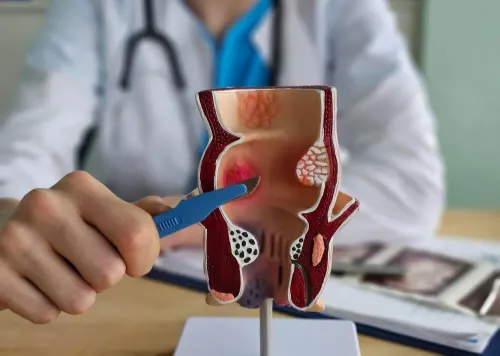
A hernia occurs when tissue pushes through a weak area in the abdominal wall. A reducible hernia becomes smaller or disappears when you lie down or apply gentle pressure. An incarcerated hernia remains trapped and cannot be pushed back; a strangulated hernia has impaired blood supply and is a surgical emergency.
Seek emergency care immediately for:
- A painful irreducible lump
- Rapidly increasing swelling
- Severe or worsening pain
- Vomiting
- Abdominal distension
- Fever
- A red or discoloured lump
- Inability to pass stool or gas
Do not wait for a routine laparoscopic consultation when bowel obstruction or strangulation is possible. A surgeon confirms a hernia diagnosis in Pune by examining you while standing and lying, assessing coughing or straining, and checking both groins and the abdominal wall.
Ultrasound clarifies an uncertain groin or abdominal-wall lump; CT helps assess complex, recurrent, obstructed or incisional hernias.
Bring:
- Previous scan reports
- Operation notes
- A medicine and allergy list
- Details of earlier abdominal operations
- When the lump appears, changes size or becomes painful
Watchful waiting may suit a minimally symptomatic man with an uncomplicated groin hernia after surgical discussion. It does not automatically apply to women, suspected femoral hernias, rapidly enlarging lumps or painful hernias.
What happens during laparoscopic hernia repair?
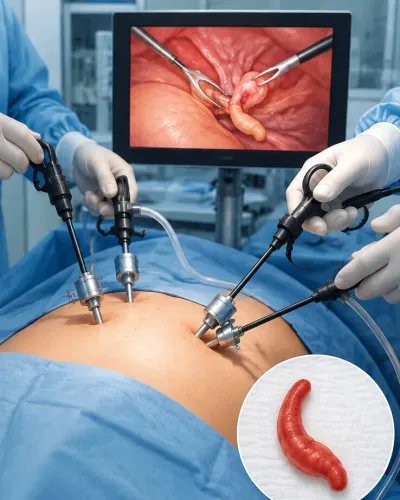
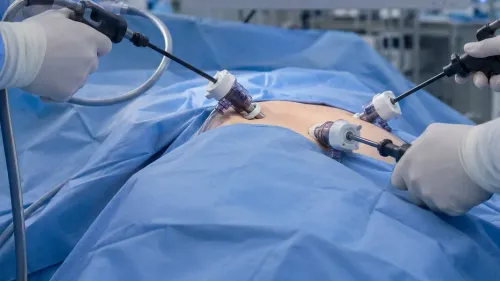
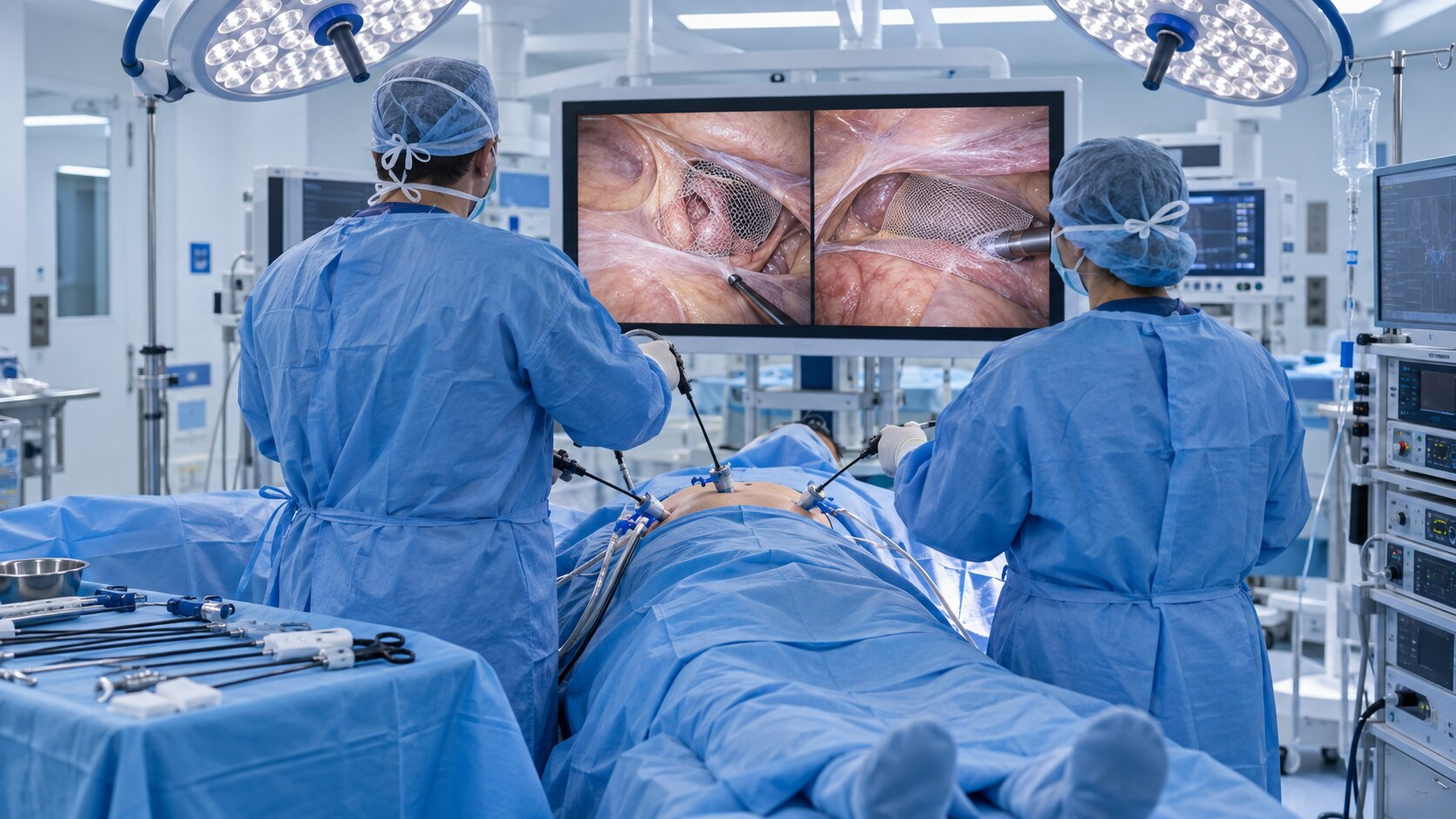
General anaesthesia keeps you asleep while the surgical team makes several small abdominal incisions. Carbon dioxide inflates the abdomen to create working space, and ports carry a camera and instruments inside. The surgeon returns the protruding tissue to its proper position, exposes the weak area, places hernia mesh over it and closes the port wounds.
For an adult groin hernia, the operation is usually one of two approaches:
| Approach | What happens |
|---|---|
| TAPP repair | The surgeon enters the peritoneal cavity, reaches the preperitoneal plane, places mesh there and closes the peritoneal flap. |
| TEP repair | The surgeon works outside the abdominal cavity, places mesh in the preperitoneal plane and avoids entering the peritoneal space. |
TAPP repair and TEP repair have broadly comparable recurrence and chronic-pain outcomes. Patient anatomy, previous operations and surgeon experience guide the choice.
Mesh is used for most adult groin and abdominal-wall repairs because it reduces recurrence compared with non-mesh tissue repair. It may be flat or shaped, lightweight or heavyweight, and permanent or partly absorbable. A selected patient with a small primary hernia can discuss a non-mesh Shouldice repair with a surgeon experienced in that technique.
Mesh does not guarantee that recurrence or chronic pain will never occur.
When is laparoscopy the better option than open repair?
Laparoscopic repair is often the better option for a bilateral inguinal hernia or a recurrent hernia after previous open anterior repair, because the surgeon can use a different tissue plane. After a previous posterior or laparoscopic repair, anterior open repair is usually preferred to avoid dissecting scarred tissue.
| Laparoscopic versus open hernia repair | Laparoscopic repair | Open repair |
|---|---|---|
| Typical advantage | Less early pain and earlier return to usual activities | Can avoid general anaesthesia |
| Anaesthesia | Requires general anaesthesia | Local or regional anaesthesia may suit selected patients |
| Operating time | May take longer | Often shorter for a straightforward repair |
| Best caution | Dense adhesions or emergency bowel problems can make it unsuitable | Large, infected or complex hernias may need this approach |
Open repair may be safer for a very large hernia, a loss of domain hernia, dense previous abdominal adhesions, severe infection, suspected strangulation or bowel obstruction. Emergency strangulation, unstable vital signs or major bowel involvement may require urgent open surgery, not a planned laparoscopic procedure.
Discuss recurrence, chronic groin pain, bleeding, urinary retention, bowel or bladder injury, vascular injury and port-site complications. Ask whether the defect is inguinal, femoral, umbilical, ventral or incisional; whether the plan is TEP, TAPP or open repair; and what would trigger conversion.
What does faster recovery look like after surgery?
Same-day discharge is possible for a fit patient after an uncomplicated repair when vital signs are stable, pain and nausea are controlled, walking and urination are satisfactory, and a responsible adult is available. Emergency cases, significant medical conditions or complications may require admission.
Hernia surgery recovery usually progresses by comfort and mobility, not by a fixed return-to-work promise.
| Activity | What determines return | Safety point |
|---|---|---|
| Desk work | Pain, concentration and comfortable sitting | Stop if medication or discomfort affects focus |
| Driving after hernia surgery | No sedating pain medicine; painless braking and turning | Arrange transport after general anaesthesia |
| Manual work or exercise | Surgeon’s lifting restrictions, wound and abdominal-wall comfort | Delay loaded bending, strenuous exercise and heavy lifting |
Walk short distances as instructed, increase activity gradually, keep dressings dry, drink fluids and prevent constipation without straining. Follow prescribed medicines; paracetamol may be suitable when your clinician confirms it is safe.
Carbon dioxide used during laparoscopy can cause abdominal or shoulder-tip pain. Bruising, fatigue, constipation and temporary groin or abdominal swelling can occur.
Smoking, obesity, diabetes, anticoagulants and chronic cough can complicate recovery. A responsible adult should remain available after discharge. Plan travel carefully: prolonged sitting, pain and limited access to medical care increase risk soon after surgery.
How should you prepare and compare hernia care in Pune?
Start with a medication review: tell the surgeon and anaesthetist about anticoagulants, diabetes medicines, steroids, supplements, allergies, smoking, chronic cough, constipation and previous abdominal operations. Follow fasting instructions exactly; arrange blood tests, an electrocardiogram or other tests when requested.
Organise an escort, transport, time away from work, and help with children or caregiving.
A hernia hospital comparison should cover these questions:
| Factor | What to compare |
|---|---|
| Hernia and technique | Experience with your hernia type; TEP or TAPP expertise |
| Backup and mesh | Open-repair backup; mesh policy; discussion of recurrence and persistent pain |
| Safety and follow-up | Anaesthesia arrangements, emergency access, urgent-contact process and follow-up length |
The search terms hernia surgeon Pune and hernia surgery cost Pune are useful only when you compare the complete plan. Request a written estimate covering consultation, ultrasound or CT, pre-anaesthetic assessment, surgeon and anaesthetist fees, operating-room charges, mesh, medicines, room stay, required pathology and complication treatment.
Dr Mahesh B Jadhav evaluates suitability for laparoscopy and explains the laparoscopic or open choice, including anaesthesia, discharge and follow-up planning. Ask what happens if the approach changes during surgery, who handles urgent concerns, and how recurrence or persistent pain will be assessed. A transparent plan beats a fixed return-to-work promise.
Related service
Surgical care ₹600 Laparoscopic hernia repair is a minimally invasive procedure used to treat inguinal, umbilical, ventral, incisional and selected recurrent hernias. View service → |
Which symptoms and complications need review after repair?
Keep every scheduled follow-up, even when the wounds look small. The surgeon checks healing, swelling, mobility, pain, recurrence and persistent groin symptoms during the agreed hernia recurrence follow-up period.
| Finding | Possible concern | Action |
|---|---|---|
| Worsening pain, fever, redness, discharge or wound separation | Infection, haematoma or seroma | Contact the surgical team promptly |
| Persistent vomiting, increasing abdominal distension, or inability to pass stool or gas | Obstruction or strangulation | Seek emergency care |
| A new painful lump that cannot be pushed back | Incarceration or strangulation | Seek emergency care; do not watch it at home |
| Inability to urinate, heavy bleeding, breathlessness, chest pain or one-sided leg swelling | Urinary retention, bleeding or venous thromboembolism | Contact the team urgently or use emergency services |
Hernia surgery complications also include bowel, bladder or vascular injury, mesh infection and recurrence. Chronic groin pain is not automatically caused by mesh; evaluation checks recurrence, nerve irritation, fixation, fibrosis and other conditions first.
Do not resume heavy lifting because the incisions look healed. Report smoking, uncontrolled diabetes, anticoagulant use and chronic cough before surgery, and address constipation or cough during recovery to reduce avoidable strain.
Frequently asked questions
How can you tell whether a lump is an emergency hernia?
A reducible lump becomes smaller when you lie down or apply gentle pressure. Seek urgent surgical care if it becomes trapped, painful, firm, discoloured, or is accompanied by vomiting or abdominal swelling.
What happens during laparoscopic hernia repair?
Under general anaesthesia, the surgeon makes small abdominal incisions, uses a camera to view the hernia, returns the tissue, and reinforces the weak area with mesh.
When is laparoscopic repair better than open hernia surgery?
Laparoscopy can suit selected people with bilateral or recurrent hernias and often uses smaller incisions. Open repair can be preferable for certain large, complex, or emergency hernias.
What does recovery after laparoscopic hernia surgery involve?
You usually begin walking soon after surgery, manage discomfort as instructed, keep the wounds clean and dry, and increase activity gradually while following lifting restrictions.
Which symptoms need review after hernia repair?
Contact your surgical team for fever, worsening pain, redness or pus at an incision, persistent vomiting, inability to pass urine, increasing swelling, or a recurrent bulge.