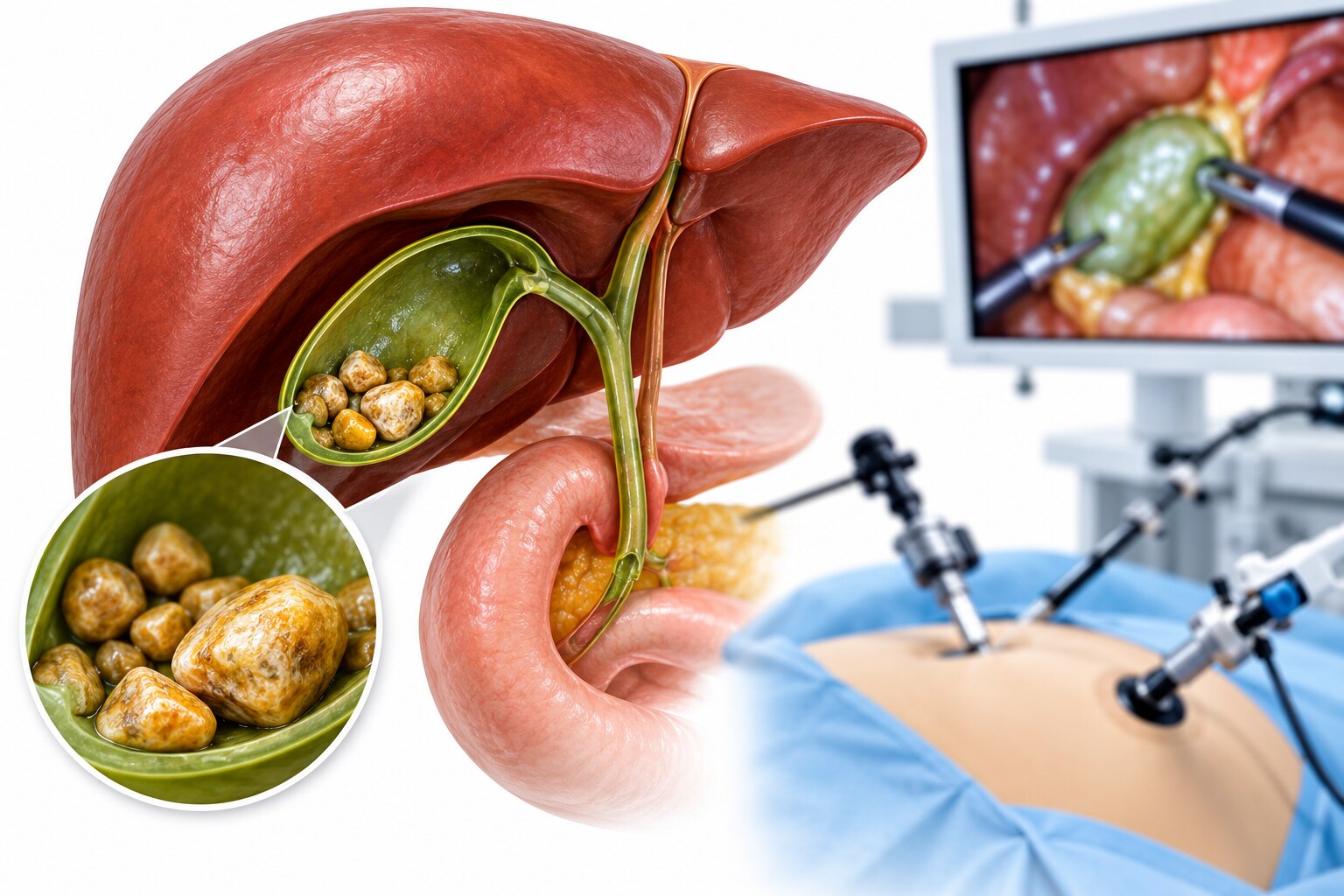
Recurring pain under the right ribs is not automatically caused by gallstones, even when an ultrasound shows stones. You will learn how to recognise an emergency, interpret the key tests, judge when gallbladder removal becomes sensible, and understand why ERCP, laparoscopic surgery and open surgery serve different purposes.
Key takeaways
- Biliary colic is steady pain lasting 30 minutes to several hours.
- Ultrasound checks stones; liver tests and MRCP assess bile-duct involvement.
- Repeated attacks or complications often support laparoscopic gallbladder removal.
- ERCP removes bile-duct stones; it does not usually remove the gallbladder.
Is your recurring pain typical of gallstones or another condition?
Recurring right-upper-abdominal pain fits biliary colic when it is steady, starts after a meal, may reach the back or right shoulder, and lasts about 30 minutes to several hours. Very brief pain, constant daily discomfort, or pain relieved by bowel movements is less typical. Gallstones on a scan do not prove they caused every episode.
| Condition | Typical pattern | Clues that point away from simple biliary colic |
|---|---|---|
| Biliary colic | Steady upper-right or epigastric pain lasting 30 minutes to several hours | Often follows a fatty meal; no fever or jaundice |
| Acute cholecystitis | Persistent, worsening pain with marked tenderness | Fever, chills, or pain lasting more than several hours |
| Gallstone pancreatitis | Severe upper-abdominal pain reaching the back | Repeated vomiting and significant illness |
| Peptic-ulcer pain | Burning or gnawing pain in the upper middle abdomen | Relationship to meals, black stools, or vomiting blood |
| Reflux | Burning behind the breastbone or upper abdomen | Sour fluid, regurgitation, or symptoms when lying down |
| Liver disease | Discomfort under the right ribs rather than colicky attacks | Jaundice, dark urine, pale stools, itching, or abdominal swelling |
Go straight to hospital for severe or persistent pain, fever or chills, repeated vomiting, jaundice, dark urine, pale stools, confusion, fainting, or severe abdominal tenderness. These signs can indicate acute cholecystitis, a bile-duct blockage, ascending cholangitis, or gallstone pancreatitis, all of which need urgent assessment.
Which tests show whether the gallbladder or bile duct is causing trouble?
An abdominal ultrasound can show gallstones, gallbladder-wall thickening, surrounding fluid, tenderness over the gallbladder and a widened common bile duct. It is the first imaging test, but it cannot prove that a visible stone caused every episode of pain.
Blood tests add evidence about inflammation and blockage. A complete blood count can show raised white cells during infection or significant inflammation. Liver-function tests, especially bilirubin and alkaline phosphatase, can suggest impaired bile drainage when their pattern is cholestatic.
| Test | What it reveals | Main use |
|---|---|---|
| Abdominal ultrasound | Stones, gallbladder inflammation, duct widening | First-line assessment |
| MRCP | Detailed images of the bile ducts and possible duct stones | Non-invasive investigation when ultrasound is unclear |
| ERCP | Direct access to the common bile duct | Remove an obstructing stone or drain infected bile |
MRCP is preferred over diagnostic ERCP when a common-bile-duct stone is suspected but ultrasound has not shown one. ERCP carries procedure risks, including pancreatitis, bleeding and infection, so it is mainly a treatment rather than a routine scan.
Gallstones are common and can exist without causing symptoms. Pain from reflux, ulcers, pancreatitis, liver disease or another bowel problem can occur in someone who also has stones. Match the scan with the pain pattern, examination and test results before attributing every attack to the gallbladder.
When do repeated attacks justify gallbladder removal?
Incidental gallstones without symptoms usually need observation, not surgery. Recurrent gallstone attacks with typical biliary pain, especially when they disrupt work, sleep or eating, shift the balance toward laparoscopic cholecystectomy. Medicines and dietary changes may reduce symptoms, but they do not remove the gallbladder or prevent new stones.
A scan strengthens the case when it matches the symptoms and shows stones with gallbladder-wall thickening, surrounding fluid, or an impacted neck stone. Acute calculous cholecystitis usually favours removal during the same hospital admission when you are fit for surgery; delaying only for antibiotics can allow another attack or deterioration.
Normal ultrasound findings make symptom pattern and alternative diagnoses more important before operating.
Complications make observation unsafe:
- Gallbladder empyema, in which pus fills an infected gallbladder
- Gangrene, caused by loss of blood supply to the gallbladder wall
- Perforation, which can spill infected bile into the abdomen
- A common bile duct stone, obstructive jaundice, ascending cholangitis or gallstone pancreatitis
Gallbladder stone surgery in Pune, or anywhere else, removes the gallbladder rather than extracting stones alone because stones can form again. ERCP is mainly used to clear or drain an obstructed common bile duct; it is not a routine substitute for cholecystectomy.
Removal also cannot guarantee that every future pain episode will disappear, so confirm that the symptoms fit gallstone disease before choosing surgery.
How do laparoscopic surgery, open surgery, ERCP and observation differ?
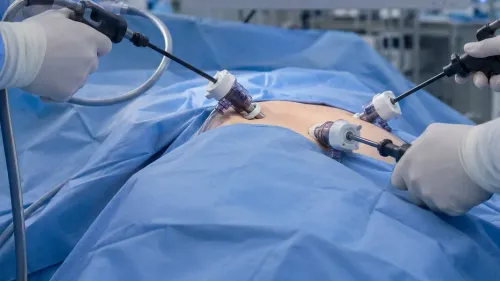
For recurring, typical gallstone pain, laparoscopic cholecystectomy removes the gallbladder and prevents further gallbladder attacks. ERCP for duct stones treats a different problem: it opens the bile-duct outlet and extracts or drains a stone lodged in the common bile duct.
| Option | What it treats | Main trade-off or use |
|---|---|---|
| Laparoscopic cholecystectomy | Stones and inflammation inside the gallbladder | Smaller incisions and quicker early recovery; bleeding, bile leak, retained stones, bile-duct injury and anaesthetic complications remain possible |
| Open cholecystectomy | The gallbladder, through a larger incision | Used when severe inflammation, scarring, bleeding or anatomy makes keyhole surgery unsafe, or when keyhole surgery must be converted |
| ERCP | A stone blocking the common bile duct | Clears or drains the duct; it does not remove the gallbladder and carries risks such as pancreatitis, bleeding and perforation |
| Nonoperative management | Incidental stones, or patients unsuitable for surgery | Avoids an operation but does not remove the source of recurring attacks or prevent every complication |
Sequence depends on the complication, not simply the scan. If jaundice, cholangitis, pancreatitis or liver-test changes indicate duct obstruction, MRCP or endoscopic ultrasound can clarify uncertain cases; confirmed obstruction usually requires ERCP first, followed by gallbladder removal when safe. Acute cholecystitis in a fit patient usually merits laparoscopic surgery during the same admission.
Observation suits symptom-free stones or a patient whose surgical risk outweighs benefit. Dr Mahesh B Jadhav can help compare surgical risk, duct findings and the likelihood that pain has another cause before choosing that sequence.
What safety decisions and ongoing symptoms belong in the treatment discussion?
Before dividing the cystic duct and artery, the surgeon should establish the Critical View of Safety. Seeing a familiar-looking triangle is not enough.
Inflammation, scarring, bleeding or unclear anatomy can make dissection unsafe; conversion to an open operation, or a bailout such as subtotal cholecystectomy, is then a safety decision rather than proof of poor performance.
Ask what the consent discussion covers:
- Bleeding, infection and bile leak
- Bile-duct injury or injury to a nearby organ
- Retained common bile duct stones and the possible need for ERCP
- Blood clots and anaesthesia complications
- Conversion from laparoscopic to open surgery
Gallbladder removal treats the gallbladder, but it does not guarantee that every future abdominal symptom will disappear. Persistent pain deserves reassessment, especially if it resembles the original attacks or appears with jaundice, fever or vomiting.
Possible explanations include:
- A retained or recurrent bile-duct stone
- Bile reflux or another gastrointestinal condition
- A functional digestive disorder
- A complication such as a bile leak
Loose stools or urgency can occur because bile now flows continuously into the intestine. This is called post-cholecystectomy diarrhoea. Mild symptoms may settle, but persistent or severe diarrhoea needs evaluation rather than dismissal as an unavoidable result of surgery.
Frequently asked questions
Does recurring right-upper-abdominal pain always mean gallstones?
No. Biliary colic is steady pain after a meal that can spread to the back or right shoulder and last 30 minutes to several hours. Very brief pain, constant daily discomfort, or pain relieved by bowel movements is less typical, and stones found on a scan do not prove they caused every episode.
Which tests check whether the gallbladder or bile duct is causing symptoms?
An abdominal ultrasound looks for gallstones, gallbladder inflammation and bile-duct widening. Blood tests including bilirubin, alkaline phosphatase, AST and ALT assess obstruction or inflammation. MRCP or endoscopic ultrasound can examine the bile duct when ultrasound and blood-test results leave concern for a duct stone.
When does recurring gallstone pain justify gallbladder removal?
Repeated typical attacks, acute cholecystitis, pancreatitis caused by gallstones, obstructive jaundice or other complications support discussing laparoscopic cholecystectomy. The decision should match your symptoms, scan findings, fitness for anaesthesia and the risks of delaying treatment.
How do laparoscopic surgery, open surgery, ERCP and observation differ?
Laparoscopic cholecystectomy removes the gallbladder through small incisions and is the usual operation. Open surgery uses a larger incision when key anatomy is unsafe or conversion is necessary. ERCP removes stones from the common bile duct rather than treating the gallbladder itself. Observation avoids an operation when stones cause no symptoms, but it does not treat recurring attacks.