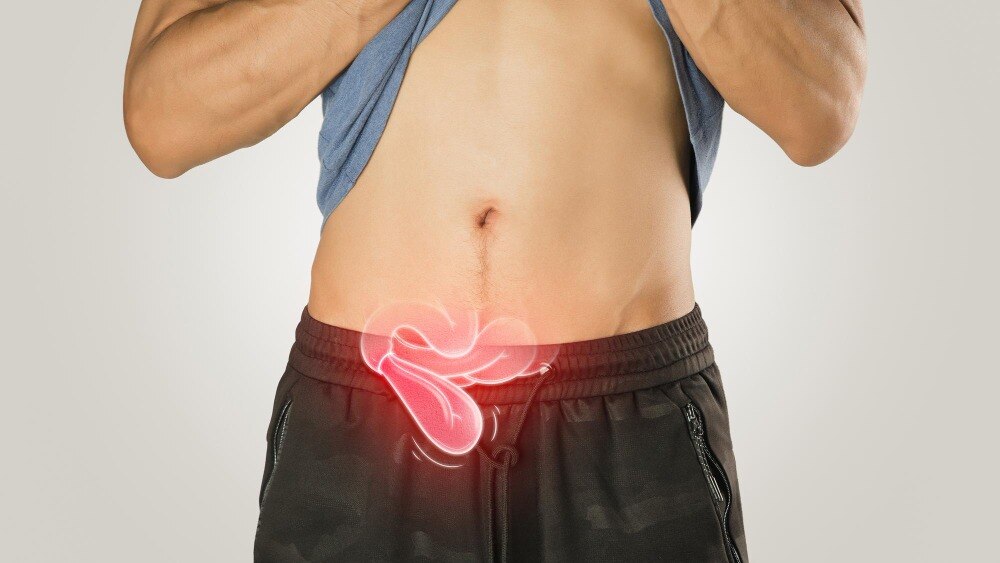
A lump at or beside your navel that hurts, enlarges, or becomes difficult to push back needs more than a cosmetic opinion. You will learn how to recognise an umbilical hernia, identify emergency warning signs, understand when planned repair makes sense, and compare open and laparoscopic options before choosing care in Pune or Pimpri-Chinchwad.
Key takeaways
- Seek emergency care for severe pain, vomiting, or a trapped, discoloured bulge.
- Plan evaluation when the bulge grows, hurts, or limits work and exercise.
- Suture, open mesh, and laparoscopic repairs suit different hernia sizes and risks.
- Ask about recurrence risk, mesh use, anaesthesia, activity limits, and follow-up.
Is the lump at your navel an umbilical hernia or an emergency?
A lump at or beside your navel is an umbilical hernia when tissue pushes through a weak spot in the abdominal wall. It becomes more prominent when you stand, cough, lift, or strain, and it may flatten or disappear while you lie down. That pattern does not prove it is harmless.
A soft bulge that gently reduces, causes little or no discomfort, and stays small can be discussed with a general surgeon; watchful waiting may be reasonable after assessment. Pain, steady enlargement, difficulty pushing it back, or interference with work or exercise needs a general-surgery assessment, not cosmetic reassurance.
A search for “umbilical hernia for surgery painful growing bulge in Pune” should end with an examination, not self-diagnosis.
Do not wait for a routine appointment for umbilical hernia surgery in Pune if any of these signs suggest incarceration or strangulation:
- Sudden severe pain
- A firm bulge that will not go back in
- Vomiting
- Abdominal swelling
- Inability to pass stool or gas
- Fever
- Skin over the lump turning red, purple, or dark
When is examination enough, and when should you plan surgery?
A clinical examination is often enough to decide whether you need observation or planned umbilical hernia surgery in Pune. The surgeon examines your abdomen while you stand and cough, checks whether the bulge reduces when you lie down or with gentle pressure, and measures and documents the fascial defect.
The consultation also covers pain, enlargement, work and exercise limits, bowel symptoms, previous abdominal operations, and medical conditions that affect healing or anaesthesia.
Ultrasound or CT is not automatic. The surgeon reserves imaging for diagnostic uncertainty, obesity that limits examination, a recurrent hernia, multiple defects, or suspected complications. Imaging becomes useful when the examination cannot show the defect clearly or when another abdominal problem needs consideration.
Watchful waiting can be reasonable for a small, reducible, minimally symptomatic adult hernia after an informed discussion of risks and follow-up. Plan elective repair when the bulge is increasing, pain persists, reduction becomes difficult, or it interferes with work or exercise.
A belt or abdominal binder may provide temporary comfort while surgery is delayed, but it does not close the fascial defect. Abdominal exercises, massage, and repeated forceful pushing cannot repair the opening and may worsen discomfort. An irreducible or acutely painful bulge needs prompt assessment, not binder use or exercise.
Which repair fits your hernia: suture, open mesh, or laparoscopic?
| Hernia type | Location and defect pattern | Previous incisions and structures at risk |
|---|---|---|
| Umbilical | At the navel; one central fascial defect | Usually no prior incision; bowel or omentum may enter the sac |
| Epigastric | Between the navel and breastbone; often a small midline defect | Usually no prior incision; preperitoneal fat is commonly involved |
| Incisional | Through a previous abdominal scar; defects may be wide or multiple | Scar tissue, bowel adhesions, and abdominal-wall nerves increase operative complexity |
| Inguinal | Groin, through the inguinal canal rather than the abdominal midline | The spermatic cord or round ligament, nerves, and nearby blood vessels require protection |
For a symptomatic adult umbilical or epigastric hernia, mesh generally lowers recurrence compared with stitches alone. The European Hernia Society and Americas Hernia Society recommend an open preperitoneal flat mesh for most cases, placing it behind the abdominal wall rather than routinely directly against bowel.
Suture-only repair can still suit a very small defect when tissue quality is good, contamination risk is present, or mesh-related concerns outweigh its recurrence benefit. The decision is individual.
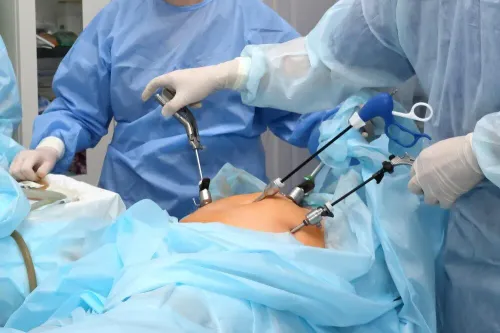
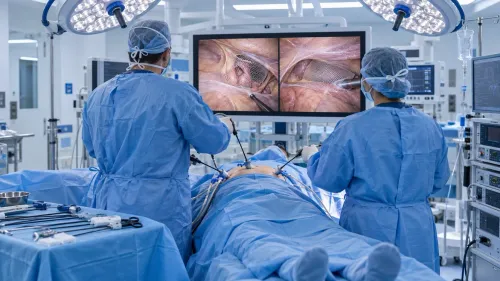
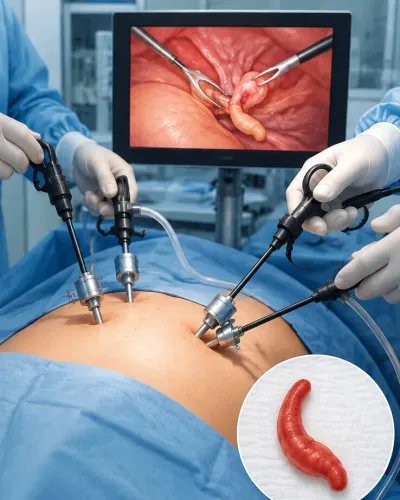
Open repair often fits a small, single defect. Laparoscopic repair may help with larger or multiple defects, obesity, higher body mass index, previous operations, or a likely future operation, but adhesions raise access risk.
Laparoscopic hernia surgery in Pune is not automatically safer, less painful, faster, or possible for everyone. It requires general anaesthesia and carries access, bowel-injury, fixation, and mesh-related risks. Cardiopulmonary fitness, anaesthetic risk, surgeon experience, defect location, and the chance of another operation must guide the choice.
How do you prepare for repair and judge recovery risks?
Preparation reduces avoidable wound, breathing, infection, and recurrence problems after umbilical hernia repair. Use this checklist before consent:
1. Stop smoking and tell the surgical team when you last smoked. Smoking reduces oxygen delivery, slows wound healing, increases chest complications, and raises infection and recurrence risk.
2. Improve diabetes control with your treating doctor. High blood glucose weakens infection defences and delays healing; follow the agreed plan for medicines, insulin, and fasting before surgery.
3. Address obesity where feasible through a realistic, supervised plan. Excess abdominal pressure and thicker tissue can make repair, breathing, wound healing, and recurrence more difficult.
4. Treat a chronic cough before elective surgery. Repeated coughing strains the repair and increases respiratory complications.
5. Treat constipation and avoid heavy straining. Ask about fluids, fibre, activity, and a suitable laxative if needed.
6. Correct malnutrition when present. A dietitian or doctor may need to address low protein, anaemia, or vitamin deficiencies before repair.
Consent should cover wound infection, seroma, chronic pain, recurrence, bowel injury, anaesthetic complications, and mesh infection. Mesh infection can require antibiotics, drainage, or mesh removal; it is more concerning after contamination or emergency bowel surgery than after a clean elective repair.
After an uncomplicated repair, walking usually starts early. Driving, work, lifting, and strenuous exercise depend on pain, wound healing, repair type, occupation, and the surgeon’s instructions—not a fixed promised timeline.
How should you choose a hernia consultation in Pune or PCMC?
Choose a hernia consultation by the plan, not by a clinic label or the word “advanced.” A hernia surgeon in Pune should examine you, measure and document the fascial defect, review previous operations and medical risks, and explain whether elective repair is appropriate or emergency assessment is needed.
A consultation with Dr Mahesh B Jadhav can connect these findings to a suitable repair plan.
Ask:
- How much experience do you have with abdominal-wall repair?
- How will you measure the defect, and when would ultrasound or CT change the decision?
- Why is open or laparoscopic repair better for my defect, body mass index, previous surgery, and anaesthetic fitness?
- Where will the mesh sit—preperitoneal, retromuscular, or against the abdominal contents—and how will you fix it?
- Can this hospital provide emergency surgery, bowel surgery, and anaesthesia support if the bulge becomes trapped?
- Who will review the wound, pain, recurrence, or seroma, and how quickly can I reach the team?
- Does the itemised estimate include surgeon, anaesthesia, mesh, hospital stay, medicines, tests, and follow-up?
| Option | Clinical questions to clarify | What it does not guarantee |
|---|---|---|
| Open repair | Is a preperitoneal flat mesh suitable for this defect? | Less pain or faster recovery |
| Laparoscopic repair | Are multiple defects, obesity, or wound concerns relevant, and can you tolerate general anaesthesia? | Automatic superiority or lower recurrence |
The same standards apply when comparing hernia surgery PCMC. Proximity to Pune or Pimpri-Chinchwad does not decide the operation; the defect, risks, expertise, and support do.
Related service
Surgical care ₹600 Laparoscopic hernia repair is a minimally invasive procedure used to treat inguinal, umbilical, ventral, incisional and selected recurrent hernias. View service → |
Frequently asked questions
How can you tell whether a navel lump is an umbilical hernia or an emergency?
An umbilical hernia often becomes more prominent when you stand, cough, lift, or strain and may flatten when you lie down. Severe or worsening pain, vomiting, a firm bulge that will not go back in, skin discolouration, or inability to pass stool or gas requires urgent medical assessment.
When is examination enough, and when should you plan umbilical hernia surgery?
A small, painless, reducible hernia can be assessed and monitored after a clinical examination. Discuss planned surgery when the bulge grows, causes pain, becomes difficult to reduce, or interferes with daily activities.
Which repair is suitable for an umbilical hernia: suture, open mesh, or laparoscopic surgery?
The choice depends on the defect size, symptoms, previous operations, abdominal wall condition, and your anaesthesia and recovery risks. Suture repair, open mesh repair, and laparoscopic repair each have different trade-offs that your surgeon should explain.
How should you prepare for umbilical hernia repair and judge recovery risks?
Share your medicines, medical conditions, previous abdominal surgery, smoking status, weight changes, and plans for work or heavy lifting. Ask about wound care, pain control, activity restrictions, recurrence risk, mesh, anaesthesia, and follow-up.
How do you choose a hernia consultation in Pune or PCMC?
Choose a surgeon who examines the bulge, explains whether observation or repair is appropriate, compares open and laparoscopic options, discusses mesh and complications, and provides a clear recovery and follow-up plan.
Keywords