The right surgeon depends on the condition, the operation required and the hospital’s ability to support you before, during and after surgery—not on a universal ranking. By comparing diagnoses, treatment options, credentials, emergency support, recovery demands and follow-up arrangements, you can make a safer shortlist for care in PCMC.
Key takeaways
- Seek urgent care for severe pain, vomiting, fever, jaundice or a rigid abdomen.
- Ask which test confirms the diagnosis and whether surgery is necessary now.
- Compare surgeon experience, hospital safety systems, anaesthesia support and emergency backup.
- Choose open, laparoscopic or robotic surgery based on safety, anatomy and recovery goals.
Which common conditions need a general surgeon, and how urgent are they?
A general surgeon in PCMC is the right starting point for many conditions that need an operation, but not every symptom requires surgery. A physician can assess unclear complaints; a gastroenterologist suits non-surgical digestive disease, an endocrinologist evaluates thyroid function, and a colorectal specialist is useful for persistent or complex anal and bowel problems.
| Condition | Best next step | Urgency and likely pathway |
|---|---|---|
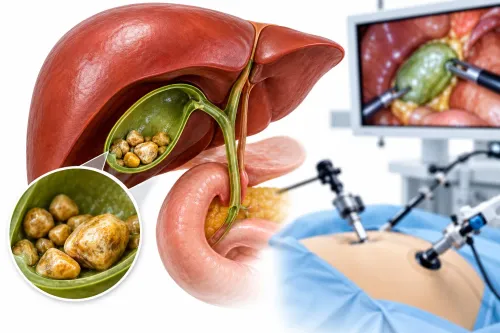
| Gallstones | General surgeon after ultrasound | Biliary pain with symptoms often leads to laparoscopic gallbladder removal; silent stones usually need observation. Jaundice, fever or pancreatitis needs urgent assessment. |
| Hernia | General surgeon | A painful, irreducible or obstructed lump needs emergency review. A comfortable groin hernia may be monitored after discussion, but women need careful assessment for a missed femoral hernia. |
| Piles or haemorrhoids, fissure and fistula | Colorectal specialist or general surgeon | Fibre, fluids and office treatment help many haemorrhoids. An abscess, recurrent drainage or persistent bleeding needs examination rather than self-treatment. |
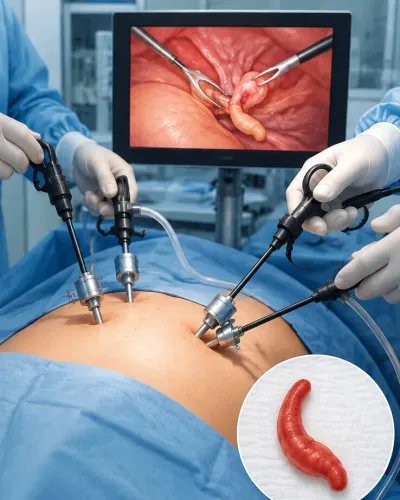
| Appendicitis | Emergency general surgeon | Imaging guides treatment. Selected uncomplicated cases may receive antibiotics, while perforation, peritonitis, an appendicolith or deterioration usually requires surgery or drainage. |
| Thyroid lumps | Endocrinologist and surgeon | Ultrasound and needle testing determine risk; breathing or swallowing difficulty raises urgency. |
| Abscesses | General surgeon | Prompt incision and drainage is usually needed; antibiotics alone do not replace drainage. |
Seek emergency surgical symptoms such as severe or worsening abdominal pain, repeated vomiting, a rigid abdomen, fainting, high fever, black or heavy rectal bleeding, or a lump that becomes painful, firm and impossible to push back. A recurrent abscess with persistent drainage suggests a fistula and needs a separate treatment plan.
What tests confirm the diagnosis before surgery?
A physical examination often establishes whether surgery is appropriate before any scan is ordered. The surgeon checks tenderness, guarding, a reducible or trapped hernia, and the position of a thyroid lump; for rectal bleeding or prolapse, anoscopy or proctoscopy can identify piles, fissures, fistulas or another cause.
1. Use imaging to define the problem. Ultrasound for gallstones and hernias can show stones, gallbladder inflammation, abdominal-wall defects and their contents. A CT scan when indicated helps assess appendicitis, abscesses, obstruction, complicated hernias or unclear abdominal pain. An incidental, symptom-free gallstone does not automatically justify surgery.
2. Order blood tests to measure severity and surgical risk. A complete blood count can show infection or anaemia; liver enzymes and bilirubin help assess bile-duct obstruction; lipase supports suspected pancreatitis. Kidney function, electrolytes, glucose and coagulation results also guide anaesthesia and medication planning.
3. Investigate thyroid lumps with thyroid ultrasound. A thyroid nodule is not automatically an indication for thyroidectomy: its ultrasound pattern, size, symptoms and lymph-node findings determine whether fine-needle aspiration or surveillance is needed.
4. Use tissue assessment when imaging cannot establish the diagnosis. Fine-needle aspiration cytology can support a decision for surveillance, lobectomy or total thyroidectomy, while a biopsy or specimen examination confirms selected masses after removal. The final decision combines symptoms, examination, test results and operative risk—not one abnormal result.
How can you judge a general surgeon and hospital objectively?
A credible comparison starts with operation-specific evidence, not star ratings. A surgeon experienced in thyroid surgery may not be the strongest choice for a complex recurrent hernia or fistula.
1. Verify surgeon credentials. Check Maharashtra Medical Council registration and a recognized surgical qualification such as MS or DNB in General Surgery. Confirm that the surgeon regularly performs the operation you need, not only related procedures.
2. Ask for recent procedure volume, complication rate and conversion rate for that operation. For laparoscopic surgery, conversion rate means how often the surgeon changes to an open operation because of bleeding, adhesions or unclear anatomy. Ask how complications are recorded and managed, rather than accepting “ไม่มี complications” as an answer.
3. Assess hospital capability. Look for current hospital accreditation, such as NABH accreditation, and confirm anaesthesia support, an intensive-care unit, blood-bank access and 24-hour emergency access. These facilities matter if breathing problems, bleeding or infection develops after surgery.
4. Get the follow-up plan in writing. Ask who reviews you, when wounds and pathology results are checked, whom to contact at night, and where you will go if fever, worsening pain or vomiting occurs.
When comparing Dr Mahesh B Jadhav with another surgeon in PCMC, use the same questions and ask for figures relating to your exact procedure. A clear answer about limits, risks and escalation is more useful than a promise of a perfect result.
Related services
Surgical Care Laparoscopic Gall Bladder Surgeries ₹600 we provide comprehensive laparoscopic care opd consultation..and further line of action from initial consultatation till discharge and post procedure... View service → |
Surgical Care ₹600 Robotic surgery is a minimally invasive technique used across many specialties. View service → |
When is open, laparoscopic or robotic surgery the better choice?
Choose the least invasive approach that gives the surgeon safe access and reliable control, not automatically the newest technology.
| Approach | Main advantage | When it fits |
|---|---|---|
| Open surgery | Direct access and tactile feedback through a larger incision | Dense adhesions, major bleeding, advanced infection, unclear anatomy or complex reconstruction |
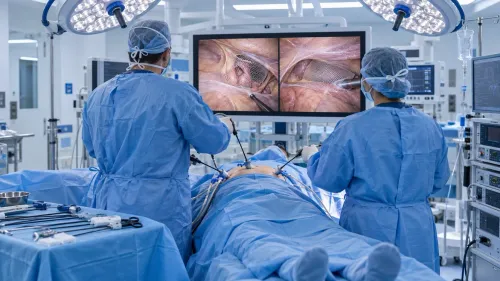
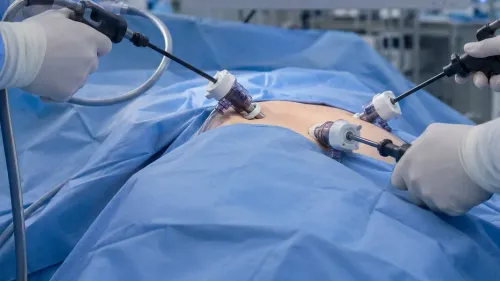
| Laparoscopic surgery | Small incisions, less wound pain and faster recovery | Many gallbladder, appendix and hernia operations when the patient can tolerate general anaesthesia and pneumoperitoneum |
| Robotic surgery | Wristed instruments and a magnified view | Selected complex procedures where improved instrument control justifies extra equipment, time and cost |
Laparoscopic surgery is unsuitable when severe heart or lung disease makes pneumoperitoneum unsafe, or when adhesions block safe entry. Dense adhesions, bleeding or unclear anatomy can also make continued keyhole dissection dangerous.
Conversion to open surgery is a safety decision, not necessarily a surgical failure. It gives the surgeon wider exposure to control bleeding, identify an injured structure or remove advanced disease.
Robotic surgery is not automatically superior. It still requires general anaesthesia, adds expense and depends on the surgeon’s experience; a skilled laparoscopic or open operation can be the better choice.
Ask whether non-operative care is reasonable. For selected uncomplicated appendicitis, antibiotics can avoid immediate surgery, but recurrence remains possible; an appendicolith, perforation, abscess, peritonitis or deterioration usually changes the plan.
For hernias, mesh repair often reduces recurrence, but infection and chronic pain remain possible. For thyroid lumps, ask specifically about thyroidectomy risks, including voice-nerve injury and low calcium.
What should you ask before consenting, and what will recovery really involve?
Before consenting, ask questions to ask a surgeon that turn a proposed operation into a clear plan, not just a procedure name.
1. What is the confirmed diagnosis, how urgent is treatment, and what happens if I wait? Ask about alternatives to surgery, including observation, medicines or an office procedure.
2. Which technique fits me—open, laparoscopic or robotic—and why? Ask what could require conversion, what anaesthesia support is available, and the expected hospital stay.
3. What complications and recurrence risk apply to this operation? For hernia repair, ask why mesh or suture repair is recommended. For thyroid surgery, discuss voice-nerve injury, low calcium, bleeding and possible lifelong hormone replacement.
4. What must I do with blood thinners, aspirin, diabetes medicines and other prescriptions? Never stop them independently; the surgeon and anaesthetist must agree on the plan.
5. What is the total treatment cost? Request separate figures for the surgeon, anaesthesia, operating room, mesh or pathology, medicines, room, tests, emergency treatment and follow-up visits.
6. What will recovery involve? Get written recovery restrictions covering lifting, exercise, driving, work absence, wound care, bathing and diet. Ask who to contact for fever, worsening pain, bleeding, vomiting or wound discharge.
Smoking, uncontrolled diabetes, poor nutrition and obesity can increase healing, lung, clotting and infection problems. Ask whether optimization before elective surgery is safer than rushing.
Finally, confirm the follow-up schedule, expected wound review, pathology discussion and the date for returning to normal activity.
Frequently asked questions
Which common conditions need a general surgeon, and how urgent are they?
General surgeons assess conditions such as hernias, gallstones, appendicitis, thyroid lumps and selected anal or bowel problems. Severe pain, repeated vomiting, fever, jaundice, fainting, bleeding or a rigid abdomen needs urgent medical assessment.
What tests confirm the diagnosis before surgery?
The test depends on the suspected condition. Ultrasound commonly assesses gallstones, hernias and thyroid lumps; a CT scan can clarify appendicitis, obstruction or complicated hernias; blood tests check infection, anaemia, liver function and thyroid function.
How can you judge a general surgeon and hospital objectively?
Ask about the surgeon’s experience with your specific operation, the proposed alternative treatments, anaesthesia coverage, infection-control practices, emergency facilities, pathology support and follow-up arrangements.
When is open, laparoscopic or robotic surgery the better choice?
Open surgery gives direct access through a larger incision. Laparoscopic surgery uses small incisions and a camera. Robotic surgery adds instrument articulation and three-dimensional control. The safest option depends on anatomy, previous operations, disease complexity, equipment and surgeon expertise.
What should you ask before consenting, and what will recovery really involve?
Ask for the diagnosis, purpose of surgery, alternatives, anaesthesia plan, major risks, expected hospital stay, pain-control plan, activity restrictions, warning signs and total follow-up schedule. Recovery depends on the operation and your health, not only the incision size.
Related services
Piles Fissure Fistula Pilonidal Sinus ₹600 we provide comprehensive consultation for pile,fissure and fistula treatment View service → |
Surgical care ₹600 Laparoscopic hernia repair is a minimally invasive procedure used to treat inguinal, umbilical, ventral, incisional and selected recurrent hernias. View service → |