
Choosing thyroid surgery is not simply a choice between a scar in the neck and a robotic system. You need to compare the operation’s purpose, access route, expected recovery, complication profile and suitability for your nodule or cancer. By the end, you can identify which questions to take to a Pune surgical consultation and when a conventional operation offers the stronger option.
Key takeaways
- Open surgery gives direct access to the thyroid, nerves and parathyroid glands.
- Robotic surgery suits selected patients after tumour size, anatomy and route assessment.
- Ultrasound, thyroid tests and needle biopsy guide the need for thyroid surgery.
- Ask about complication rates, surgeon experience, recovery and the recommended extent of removal.
How do open, endoscopic and robotic thyroid operations differ?
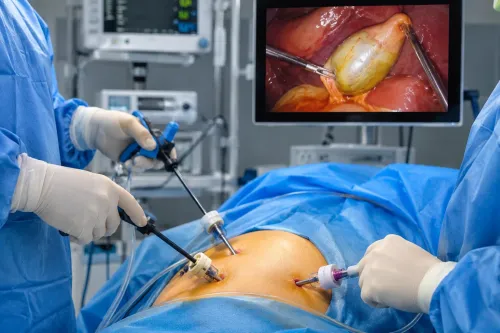
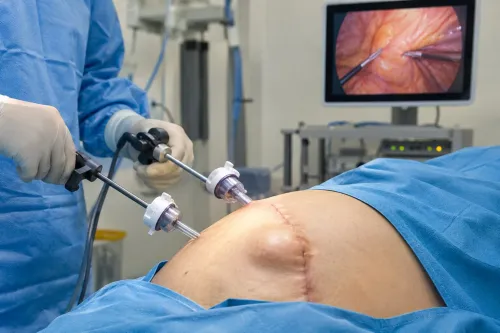
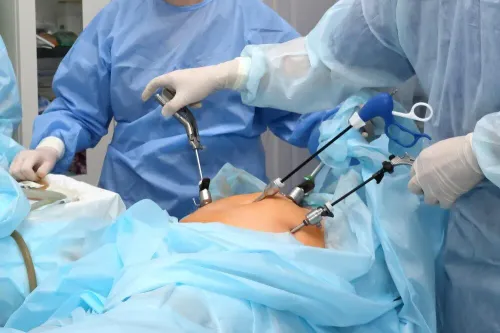
A conventional open thyroidectomy uses one incision in a lower-neck crease, giving direct access to the thyroid and nearby nerves and parathyroid glands. Standard endoscopic or laparoscopic surgery uses a camera and long instruments through smaller openings; depending on the technique, these may be in the neck or through a remote route.
Robotic surgery is also remote access, not incision-free. Instruments may enter through the armpit, breast or chest, around the areola, through a facelift incision, or another selected entry point. It can conceal a neck scar, but the route may require a wider skin-flap dissection and can leave scars away from the neck.
| Option | Main practical advantage | Main trade-off |
|---|---|---|
| Open | Direct, broad access through a lower-neck crease | Visible neck scar, though it usually follows a natural crease |
| Endoscopic or laparoscopic | Camera magnification through smaller access points | Longer instruments, restricted angles and route-specific scars |
| Robotic | Magnified, articulated dissection for selected thyroid locations without a direct neck incision | Longer operating time, more tissue dissection, remote pain and higher cost |
Robotic surgery does not prove better cancer control, safer nerve preservation or faster recovery than a well-performed open operation. Chest, shoulder or armpit pain and altered sensation can offset its cosmetic appeal.
The thyroid surgery benefits that matter depend on tumour position, anatomy, required lymph-node work and your priorities—not the word “robotic.” A search for thyroid surgery robotic surgery for benefits in Pune should compare those trade-offs, including total effort, recovery and cost.
Who may be suitable for robotic thyroid surgery, and when is open surgery stronger?
Eligibility depends on the nodule and the route, not on the presence of a robot. Ultrasound and, when needed, CT or MRI show its size, position, lobe involvement, airway or oesophageal contact, and lymph-node disease; examination adds neck mobility, scars and body shape. The surgeon’s thyroid experience remains central.
A robotic route may suit a small, well-localised nodule requiring lobectomy, including an indeterminate nodule where thyroid nodule surgery provides a definitive diagnosis. Selected benign, suspicious or confirmed cancers may qualify when disease is confined to one lobe and does not require broad lymph-node dissection.
Total thyroidectomy or node clearance demands a route that gives adequate working space.
Open surgery provides safer, broader access when:
- The tumour is large, invasive, fixed, or extends into the airway, oesophagus or surrounding tissues.
- Imaging shows extensive lymph-node disease or a substernal goitre.
- Severe thyroiditis has made the thyroid densely inflamed and difficult to separate.
- Previous neck or chest surgery has altered tissue planes, or body habitus prevents safe axillary, breast, chest or facelift access.
- The planned operation needs extensive dissection that remote instruments cannot perform safely.
Remote access avoids a direct lower-neck scar but creates scars elsewhere and a larger skin flap. Prior operations and body shape affect both access and cosmetic results.
Anyone considering robotic surgery in Pune should ask for a conversion plan: if bleeding, anatomy or tumour spread makes remote access unsafe, can the team move promptly to open surgery? Assess the answer against imaging, examination and the surgeon’s recorded thyroid experience.
Which tests determine whether you need surgery and how much thyroid should be removed?
Whether surgery is needed and how much thyroid to remove depends on the nodule’s test results, ultrasound appearance, symptoms and evidence of spread—not on whether the operation is open or robotic. A thyroid-stimulating hormone (TSH) blood test checks thyroid function; an abnormal result may lead to additional hormone or radionuclide testing.
Ultrasound assesses size, solid composition, margins, shape, calcifications and suspicious lymph nodes.
Many benign nodules are monitored with repeat ultrasound. Thyroid nodule surgery becomes more reasonable if the nodule grows, causes pressure or swallowing difficulty, creates a cosmetic problem, produces excess thyroid hormone, or remains diagnostically uncertain.
Ultrasound-guided fine-needle aspiration cytology (FNA) assigns a Bethesda category when performed; that category helps determine observation, repeat sampling, molecular testing or surgery.
Before thyroid surgery in Pune, the review may include:
- Vocal-cord examination when you have hoarseness, prior neck surgery, invasive disease or other risk of nerve involvement.
- CT, MRI or another cross-sectional scan when ultrasound suggests substernal extension, airway or oesophageal involvement, bulky lymph nodes or advanced disease.
- Thyroid-function testing after surgery, because some patients develop hypothyroidism even after a lobectomy.
| Option | What it establishes | When it applies |
|---|---|---|
| Lobectomy | Removes one lobe and can provide definitive histology | Indeterminate nodules; selected small, low-risk cancers confined to one lobe without evident spread |
| Total thyroidectomy | Removes nearly all thyroid tissue | Larger tumours, gross extension beyond the thyroid or metastatic disease; lifelong levothyroxine is nearly always required |
For selected patients, lobectomy provides adequate cancer treatment and preserves more thyroid function. Total thyroidectomy permits radioactive iodine planning in appropriate cases but creates permanent dependence on levothyroxine.
Does robotic access reduce the risks of thyroid surgery?
Robotic access does not remove the main risks of thyroid surgery. Open, endoscopic and robotic operations can all cause bleeding or a neck haematoma, infection, recurrent laryngeal-nerve injury, external-branch-of-the-superior-laryngeal-nerve injury, voice change, hypocalcaemia from parathyroid injury and a need for thyroid-hormone replacement.
| Approach | What remains possible | Additional trade-offs |
|---|---|---|
| Open | Bleeding, infection, nerve injury, voice change, hypocalcaemia and hormone replacement | Visible lower-neck scar |
| Endoscopic | The same thyroid-specific complications | Remote scars, limited instrument movement and possible conversion |
| Robotic | The same thyroid-specific complications | Chest, shoulder or axillary pain, altered sensation, temporary arm discomfort and more extensive dissection |
Robotic access still requires direct identification and protection of the nerves and parathyroid glands, careful bleeding control and safe anaesthesia. Intraoperative nerve monitoring can help identify and track the recurrent laryngeal nerve, but it cannot guarantee a normal voice.
Longer operating time and wider tissue dissection can offset the appeal of a hidden neck scar, so robotic surgery in Pune is not automatically safer or faster.
Ask how the team will handle:
- Conversion to open surgery if remote access becomes unsafe
- Postoperative calcium testing and treatment for hypocalcaemia
- Voice assessment, including vocal-cord review when symptoms or risk require it
- The surgeon’s thyroid complication record, not just the cosmetic claim
The thyroid surgery benefits that matter most depend on your disease, anatomy and priorities. A concealed neck scar may be valuable, but it does not prove better cancer control or nerve preservation.
How should you choose between thyroid surgery options in Pune?
Compare the disease plan and the surgeon’s record before comparing machines. For thyroid surgery in Pune, ask how many thyroid operations the surgeon performs, the rates of nerve injury, bleeding and permanent hypocalcaemia, and what happens if remote access must be converted to an open operation.
| Option | Scar and access | Key question |
|---|---|---|
| Open thyroidectomy | Lower-neck crease scar | Does it give the safest access for this tumour and lymph-node plan? |
| Endoscopic surgery | Remote or small access route | What extra dissection, pain and recovery time does the route involve? |
| Robotic surgery | Armpit, breast, chest or facelift route; no direct neck incision | Do hidden neck scars outweigh remote scars, cost and possible arm or chest discomfort? |
During the consultation, ask:
- Which pathology result and Bethesda category support observation, lobectomy or total thyroidectomy?
- Which lymph nodes require sampling or dissection?
- Will intraoperative nerve monitoring be used, and when?
- When will calcium, voice and thyroid-function tests be checked after surgery?
- Could you need levothyroxine, radioactive iodine, another operation or other treatment?
Bring your ultrasound report and images, FNA result, thyroid-function tests, compression or voice-change symptoms, family or radiation history, and the written reason for the recommendation.
This matters whether you are comparing thyroid surgery with robotic surgery in Pune or searching “thyroid surgery robotic surgery for benefits in Pune.” Dr Mahesh B Jadhav can help connect the findings, access route and recovery trade-offs without making cosmetic claims the deciding factor.
Related service
Surgical Care ₹600 Robotic surgery is a minimally invasive technique used across many specialties. View service → |
Frequently asked questions
How do open, endoscopic and robotic thyroid operations differ?
Open thyroidectomy uses one lower-neck incision and direct access. Endoscopic and robotic procedures use a camera and long instruments through neck or remote-access incisions. Robotic surgery adds wristed instruments and three-dimensional visualisation, but requires a suitable access route.
Who may be suitable for robotic thyroid surgery, and when is open surgery stronger?
Robotic surgery suits selected patients after assessment of thyroid size, nodule or cancer features, neck anatomy and the chosen access route. Open surgery is stronger when the thyroid is large, disease extends beyond the gland, lymph nodes require treatment, or direct access offers better control.
Which tests determine whether you need surgery and how much thyroid should be removed?
Assessment commonly includes thyroid-stimulating hormone testing, neck ultrasound and ultrasound-guided fine-needle aspiration when a nodule needs sampling. CT may help map large or invasive disease. Results guide options such as lobectomy, total thyroidectomy or thyroidectomy with lymph-node dissection.
Does robotic access reduce the risks of thyroid surgery?
Robotic access can avoid a visible neck incision in selected patients, but it does not remove risks such as bleeding, infection, voice-box nerve injury, low calcium or the need for further treatment. The safest option depends on disease, anatomy, surgeon experience and access-related risks.
How should you choose between thyroid surgery options in Pune?
Compare the proposed operation, access route, extent of removal, surgeon’s thyroid and robotic experience, expected hospital stay, recovery plan and complication management. Ask why the recommended approach fits your ultrasound, biopsy and imaging results.
Keywords