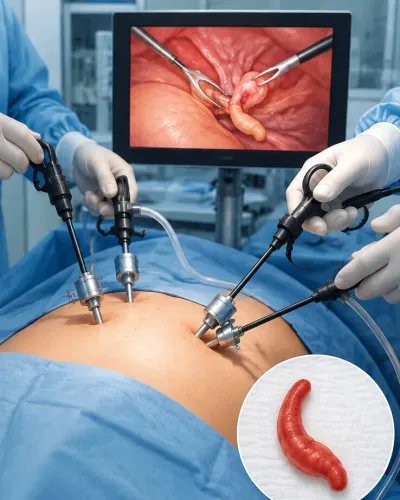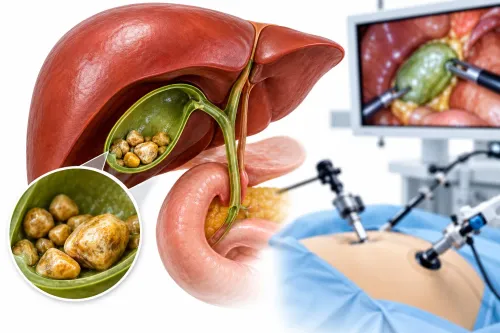
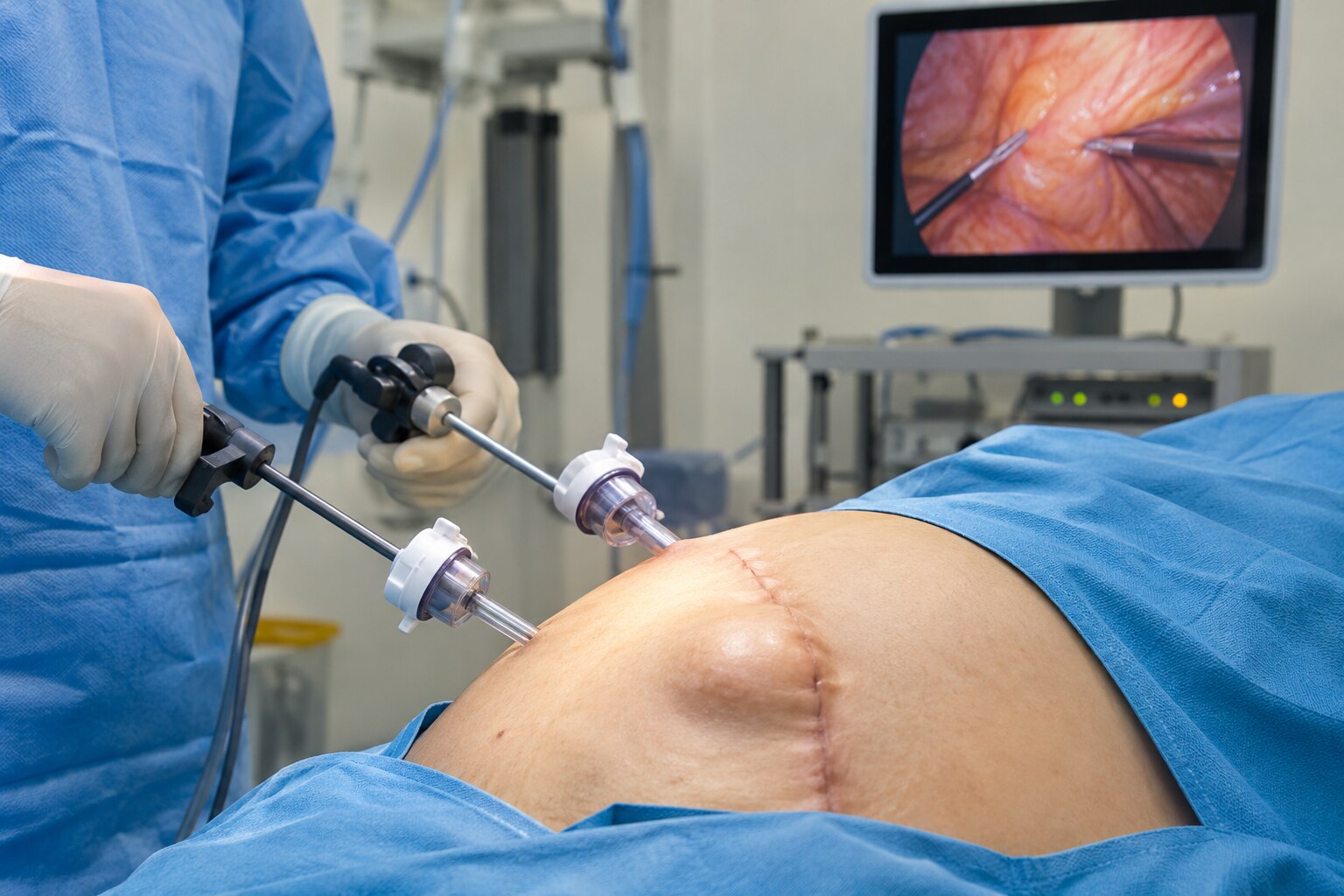
An incisional hernia forms at or beside an earlier abdominal operation, and the visible lump does not reveal the full size or complexity of the defect. By comparing the scan findings, abdominal-wall condition, previous repairs and available techniques, you can ask which operation is safest for your specific anatomy rather than choosing by the words laparoscopic or robotic alone.
Key takeaways
- A prior abdominal incision distinguishes incisional hernias from umbilical and groin hernias.
- CT imaging maps the defect, its contents, adhesions and the abdominal wall muscles.
- Choose open, laparoscopic or robotic repair based on defect size, location and surgical history.
- Ask where the mesh will sit and whether the defect will be closed directly.
How an Incisional Hernia Differs from Other Hernias
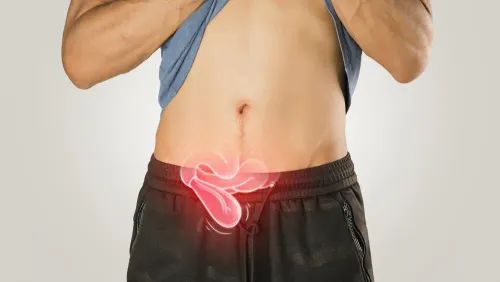
An incisional hernia forms through or beside a previous abdominal surgical incision, where the abdominal wall has weakened. A primary umbilical hernia starts at the navel without an earlier operation at that site; an inguinal hernia develops in the groin. The location of the bulge matters when assessing incisional hernia surgery in Pune.
Look for these features:
- A lump appearing in or next to an abdominal scar, especially when you stand, cough, or strain.
- Enlargement over weeks, months, or years as the gap in the abdominal wall widens.
- Pulling, aching, or sharp discomfort during coughing, lifting, exercise, or prolonged standing.
- A bulge that becomes smaller when you lie down or returns gently with light pressure may be reducible. Do not force it back if doing so causes pain.
- Increasing pain, a bulge that cannot be pushed back or does not settle when you lie down, vomiting, abdominal distension, skin discoloration, or inability to pass stool or gas.
The first four findings need a clinical assessment, even when symptoms are mild. A minimally symptomatic, reducible hernia can sometimes be watched after an individual discussion, but watchful waiting does not repair the defect and enlargement can change future treatment. The final group signals possible obstruction or trapped, compromised bowel.
Seek emergency assessment immediately; do not wait for a routine appointment with a hernia surgeon in Pune.
What the Examination and CT Scan Must Establish
An elective repair decision starts with whether the hernia is painful, enlarging, reducible and safe to observe. Examination can underestimate the true defect when obesity hides the margins or recurrent scarring creates several connected openings. CT is particularly useful for recurrent, large, lateral, painful or anatomically uncertain hernias.
| Finding | What it establishes | Why it matters |
|---|---|---|
| Defect width and number | One opening or multiple defects | Determines closure and mesh coverage |
| Midline or lateral position | Relation to the abdominal wall | Guides access and reconstruction |
| Rectus muscles and prior mesh | Muscle quality, separation and mesh location | Shows whether the old repair can be reused |
| Bowel adhesions and loss of domain | Contents and whether the abdomen can accommodate them | Predicts adhesiolysis and respiratory risk |
| Skin quality and previous operations | Ulceration, infection, scars and prior incisions | Affects wound safety and incision choice |
Before elective hernia surgery PCMC or elsewhere, address smoking, diabetes, obesity, chronic cough and constipation because each increases wound complications or recurrence. Weight loss can improve safety, but waiting too long for a target weight is unwise when the hernia is enlarging or painful.
- Ask whether the scan shows bowel stuck to mesh, loss of domain, skin infection or a defect too wide for simple closure.
- Confirm the plan for abdominal-wall reconstruction if the rectus muscles cannot be brought together safely.
- Treat cough, constipation and high blood glucose before surgery when possible; persistent strain can stress the repair.
Open, Laparoscopic or Robotic: Which Approach Fits
No single approach is best for every incisional hernia. The defect’s size, location, previous mesh, adhesions, skin condition, loss of domain and need for abdominal-wall reconstruction determine the safer choice.
| Option | What it involves | When it fits |
|---|---|---|
| Open mesh repair | Direct access to close and reinforce the abdominal wall | Very large or complex defects, contaminated or infected fields, poor keyhole anatomy, or planned reconstruction |
| Laparoscopic repair | Small incisions with intraperitoneal or preperitoneal mesh placement | Selected defects where large skin incisions and wound complications are a concern |
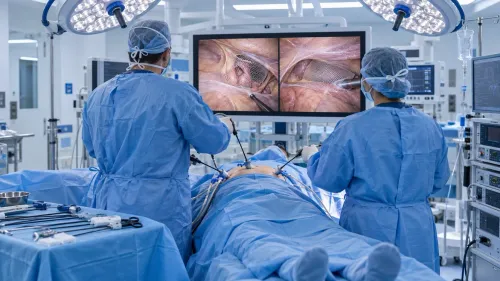
| Robotic repair | Minimally invasive repair with improved instrument articulation and suturing access | Selected defects requiring precise dissection or closure, when the surgeon considers the route safe |
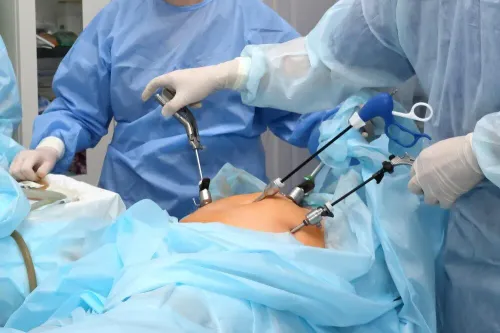
Laparoscopic hernia surgery in Pune can reduce the length and number of large skin incisions and wound problems in selected patients. It becomes a poor fit with dense adhesions, infected mesh, bowel involvement, loss of domain, skin infection or ulceration, or a defect that cannot be closed safely.
Robotic surgery remains surgeon-controlled minimally invasive surgery. Better wristed instruments do not guarantee fewer complications, lower recurrence, less chronic pain or faster recovery.
Conversion from laparoscopic or robotic surgery to an open repair is a safety decision, not automatically a complication. Ask how the surgeon will respond if adhesiolysis reveals injured bowel, unsafe anatomy or a need for abdominal-wall reconstruction. The consultation should compare intraperitoneal and preperitoneal routes separately, because mesh position changes the risks and technical plan.
Mesh Plane, Defect Closure and Complex Reconstruction
The goal of incisional hernia surgery in Pune is to rebuild the abdominal wall, not simply to place instruments through small incisions. In a selected repair, the surgeon brings the fascial edges together and reinforces that closure with mesh.
Bridging leaves the gap covered by mesh alone; it can place greater load on the implant and affect recurrence planning.
| Option | What it means | Planning issue |
|---|---|---|
| Fascial closure with mesh | The defect is closed, then reinforced | Requires safe tension control and adequate mesh overlap |
| Mesh bridging | Mesh spans an unclosed gap | Used when closure is not possible; recurrence risk needs careful discussion |
| Abdominal-wall reconstruction | Component separation or transversus-abdominis release creates mobility for wide defects | Adds wound, seroma, nerve and recovery risks |
A retromuscular or another extraperitoneal mesh plane is generally preferred when feasible because it keeps ordinary mesh away from bowel. Intraperitoneal mesh can suit selected laparoscopic repairs, but its barrier coating does not eliminate adhesions, fistula, migration or difficult future reoperation.
If the muscles cannot meet without tension, component separation or transversus-abdominis release is reconstruction, not merely a bigger keyhole repair. Expect discussion of seroma, wound morbidity, nerve injury and prolonged recovery. Recurrent hernias need failure analysis: infection, missed or poorly overlapped mesh, tension and weak tissue can each require a different plane or reconstruction strategy.
Questions to Take to a Hernia Surgeon in Pune or PCMC
Take your CT images and ask the surgeon to explain the repair in measurements, not marketing terms. Compare hernia surgery PCMC and Pune options using these questions:
- What is the defect width, number and exact location? Is it midline or lateral?
- What does the CT show about rectus muscles, previous mesh, bowel adhesions, loss of domain and skin quality?
- Which mesh plane is planned: retromuscular, preperitoneal or intraperitoneal? How much overlap will the mesh have?
- Will you close the fascia and reinforce it, or bridge the gap with mesh alone?
- Are drains likely, and what determines their removal?
- How extensive might adhesiolysis be? What is the plan if bowel injury occurs?
- What would trigger conversion from laparoscopic or robotic surgery to open repair?
- If the mesh becomes infected, will treatment involve antibiotics, drainage, mesh removal or staged reconstruction?
| Option | Main trade-off | Ask when comparing |
|---|---|---|
| Open repair | Direct access for large, complex defects and reconstruction | Is component separation or transversus-abdominis release needed? |
| Laparoscopic repair | Smaller skin incisions, but adhesions and bowel involvement can limit safety | Is intraperitoneal or preperitoneal placement appropriate? |
| Robotic repair | Better instrument articulation for selected suturing tasks, not a guarantee of fewer complications | Can the surgeon also perform open abdominal-wall reconstruction? |
Ask how smoking cessation, diabetes control, weight management, and treatment of cough or constipation will alter timing. Watchful waiting can suit a minimally symptomatic, reducible hernia after individual discussion; another pregnancy can also support delay when symptoms are minor.
Dr Mahesh B Jadhav can review these questions and the CT findings together as a Pune-based surgical consultant, including whether laparoscopic hernia surgery in Pune is suitable.
Related service
Surgical care ₹600 Laparoscopic hernia repair is a minimally invasive procedure used to treat inguinal, umbilical, ventral, incisional and selected recurrent hernias. View service → |
Frequently asked questions
How does an incisional hernia differ from an umbilical or inguinal hernia?
An incisional hernia develops through or beside a previous abdominal surgical incision. An umbilical hernia starts at the navel, while an inguinal hernia develops in the groin.
What must examination and a CT scan establish before repair?
The assessment should establish the defect’s size, location, number of defects, contents, reducibility, abdominal wall muscles, adhesions and any signs of obstruction or strangulation.
How do open, laparoscopic and robotic hernia repairs differ?
Open repair uses an incision over the abdominal wall defect. Laparoscopic repair uses small access ports, while robotic repair adds wristed instruments and three-dimensional visualisation. The suitable approach depends on the hernia anatomy, previous operations, adhesions, medical condition and surgeon’s plan.
What should you ask about mesh placement and defect closure?
Ask which mesh plane will be used, whether the defect will be closed rather than bridged, how the surgeon will manage adhesions, and whether component separation or another complex reconstruction is necessary.
Keywords