TEP is designed mainly for selected groin hernias, but a visible lump alone cannot establish whether it is the right operation for you. By the end, you will know which symptoms, hernia patterns, medical factors and previous operations support TEP, when another repair is safer, and what to ask during consultation.
Key takeaways
- TEP primarily treats inguinal and femoral hernias.
- Mesh sits in the preperitoneal layer behind the abdominal wall.
- Previous abdominal surgery can affect TEP suitability.
- Compare TEP with TAPP, open and robotic repair before choosing.
What does TEP repair treat, and where does the mesh go?
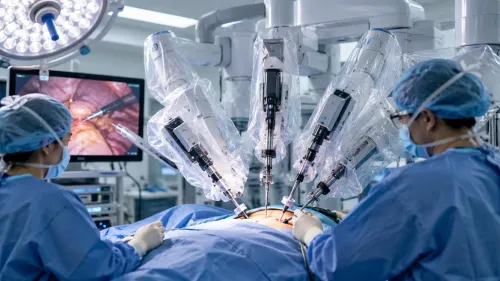
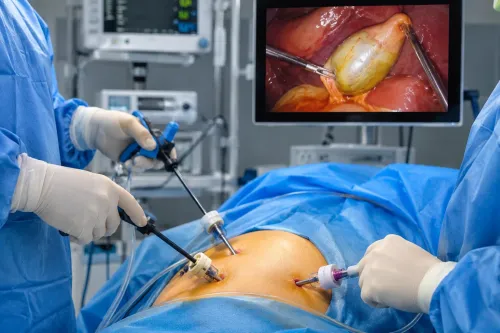
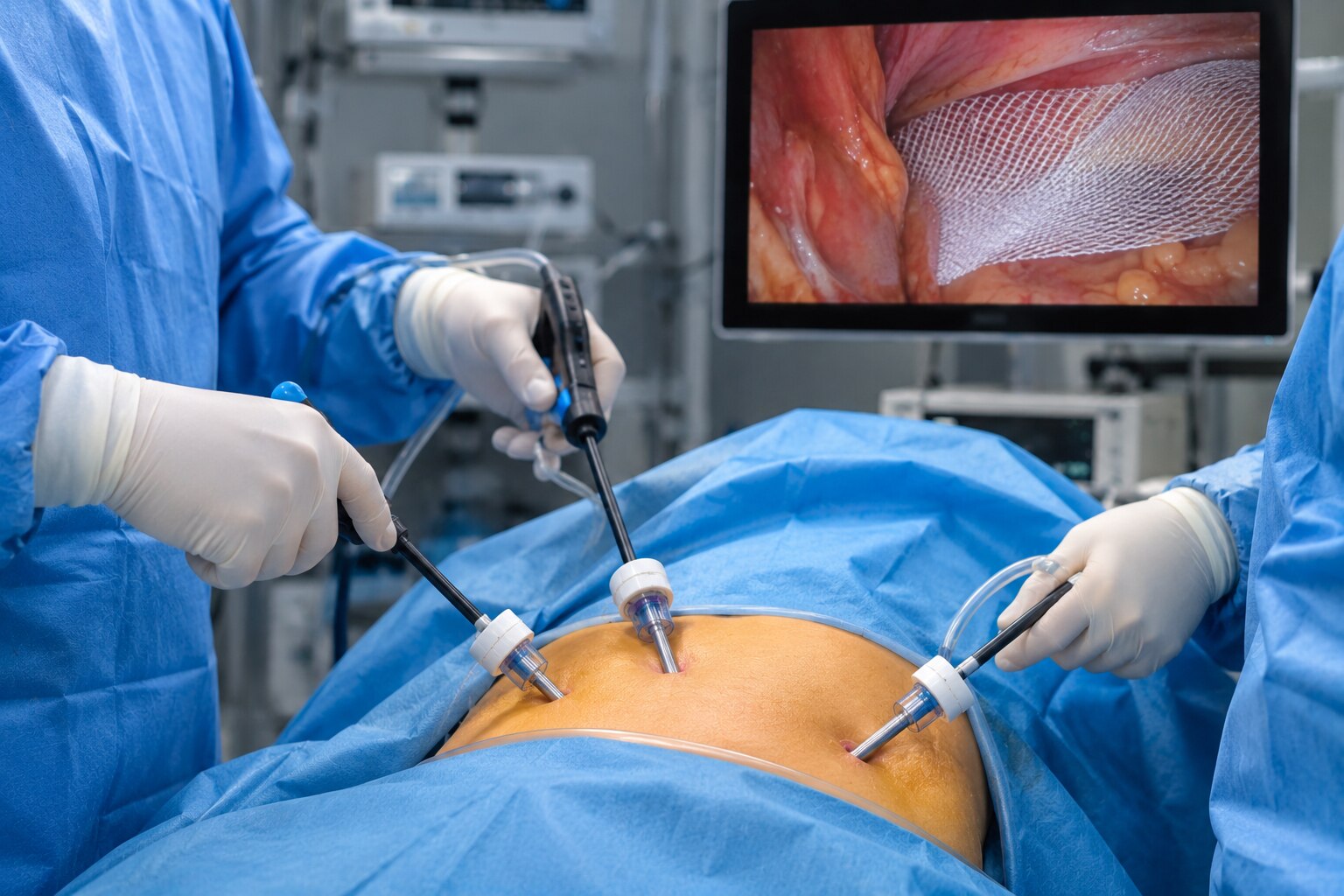
TEP means totally extraperitoneal repair: the surgeon works behind the abdominal wall in the preperitoneal layer, reduces the groin hernia and places mesh over the myopectineal orifice without deliberately entering the abdominal cavity. This posterior approach primarily treats inguinal and femoral hernias, not every umbilical, ventral or incisional hernia.
A straightforward, reducible unilateral inguinal hernia can suit TEP, but a first-time unilateral case may reasonably be treated with either open or laparoscopic repair. Bilateral inguinal hernias offer a clearer minimally invasive advantage because both sides can be reached through the same port access.
- Ask whether the lump is inguinal, femoral or both.
- Confirm that it reduces when you lie down or with gentle pressure, if your clinician says this is safe.
- Tell the surgeon about previous groin, lower-abdominal or pelvic operations.
- Discuss mesh repair and whether you can safely undergo general anaesthesia.
- Ask how the plan changes if the anatomy differs during surgery.
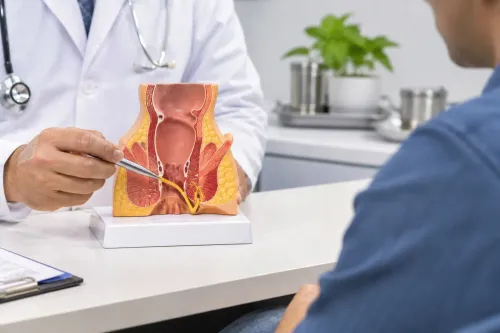
Women need careful examination because a femoral hernia can resemble an inguinal lump. A laparo-endoscopic approach can expose and cover the femoral canal when appropriate. Ultrasound or other imaging helps when examination leaves the diagnosis uncertain, but the final choice depends on your anatomy, not a photograph or online description.
For TEP hernia repair in Pune, seek an examination that distinguishes the hernia type before selecting the operation.
Which patient factors support elective TEP?
A suitable elective TEP candidate is an adult with a symptomatic or enlarging, reducible groin hernia who accepts mesh-based repair and can safely undergo general anaesthesia. The surgeon confirms this through examination, not a bulge photograph or online description.
Assessment focuses on:
- Bulge size, side, tenderness, pain pattern and reducibility
- Suspected femoral involvement and bowel symptoms such as vomiting, distension or difficulty passing stool
- Body weight and its effect on anaesthesia, access and recovery
- Previous abdominal, pelvic, open groin or preperitoneal operations
- Cardiopulmonary fitness and ability to tolerate anaesthesia and laparo-endoscopic pressure
| Pattern | How the options are weighed | Why it matters |
|---|---|---|
| Bilateral inguinal hernias | TEP or TAPP often offers an advantage over open Lichtenstein repair | Both groins can be reached through shared port access |
| First-time unilateral hernia | Compare TEP, TAPP and open Lichtenstein individually | Anatomy, medical fitness, recovery priorities and surgeon expertise differ |
| Recurrence after open anterior repair | A posterior approach such as TEP often fits the unscarred plane | It avoids much of the scarred anterior tissue |
A man with an asymptomatic or minimally symptomatic inguinal hernia can choose watchful waiting after counselling about future symptoms and emergency warning signs. Progressive pain, activity limits or a groin hernia in a woman requires a different assessment, particularly because femoral hernias can be missed.
Preoperative blood tests, an electrocardiogram or other investigations are ordered when age and medical history indicate them. Anaesthesia review is part of candidacy. If you are comparing laparoscopic hernia surgery in Pune, ask how these findings affect the recommended approach.
When is TEP unsafe, unsuitable or not an elective procedure?
A painful, irreducible hernia with vomiting, abdominal distension, inability to pass stool or gas, fever, or skin discoloration is not an elective TEP case. Seek urgent surgical assessment because incarceration, obstruction or strangulation can threaten the bowel.
Seek emergency assessment for:
- A lump that is painful and cannot be pushed back.
- Vomiting, increasing abdominal swelling, or inability to pass stool or gas.
- Fever, red or blue-black skin, worsening tenderness, or sudden severe pain.
The operation may require bowel evaluation and, if the bowel is damaged, resection. Contamination can also make mesh unsafe, so the surgeon may choose another operation or a non-mesh strategy.
Large or complicated hernias, loss of domain, unusual anatomy and dense adhesions can prevent safe preperitoneal mesh placement. Extensive lower-abdominal or pelvic surgery, radiation, previous preperitoneal mesh and major scarring can make TEP dissection harder, cause peritoneal tears and require conversion to TAPP or open surgery. These findings require planning, not automatic exclusion.
A recurrence after TEP or TAPP is not automatically repaired through the posterior plane again. An experienced surgeon may recommend an anterior open repair through a different tissue plane.
Severe heart or lung disease, inability to tolerate general anaesthesia, or intolerance of the pressure used during laparo-endoscopic surgery can favour open repair. Discuss urinary retention, haematoma, seroma, vascular or visceral injury, port-site problems, chronic groin pain, mesh complications and recurrence before consenting.
How should you compare TEP with TAPP, open and robotic repair?
TEP is not automatically better than every alternative. TAPP enters the peritoneal cavity, repairs the defect from the posterior side and closes the peritoneum over the mesh; TEP remains outside that cavity. In suitable adults, recurrence and chronic-pain outcomes are broadly comparable, so previous operations and surgeon expertise often decide the approach.
| Option | Main difference | When it may matter |
|---|---|---|
| TEP | Preperitoneal mesh placement without deliberate entry into the abdominal cavity | Bilateral hernias or recurrence after an anterior open repair; expertise is essential |
| TAPP | Enters the peritoneal cavity, then closes the peritoneum over posterior mesh | Useful when preperitoneal access is difficult or the surgeon has greater experience with TAPP |
| Open Lichtenstein | Anterior groin incision and mesh; avoids laparo-endoscopic pressure | A patient unable to tolerate general anaesthesia, or recurrence after previous TEP or TAPP |
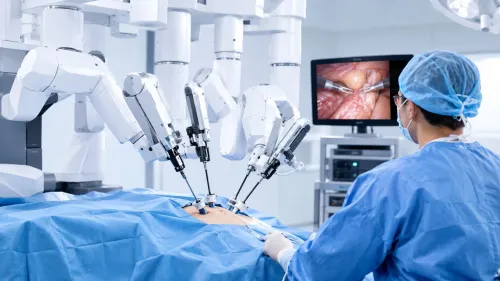
| Robotic repair | Posterior mesh placement with improved instrument control | Depends on general anaesthesia, local equipment, cost and surgeon experience; it is not automatically more suitable |
TEP’s central technical challenge is creating the preperitoneal space and covering the entire myopectineal orifice without injuring nearby structures. Peritoneal tears, bleeding or inadequate coverage can force conversion, so experience matters more than the label alone.
During laparoscopic hernia surgery in Pune, ask which approach the surgeon performs most often and why it fits your anatomy.
After an uncomplicated repair, early mobilisation is encouraged. Increase activity according to pain, wound condition and medical advice rather than following a fixed restriction schedule.
What happens before, during and after a TEP consultation in Pune or PCMC?
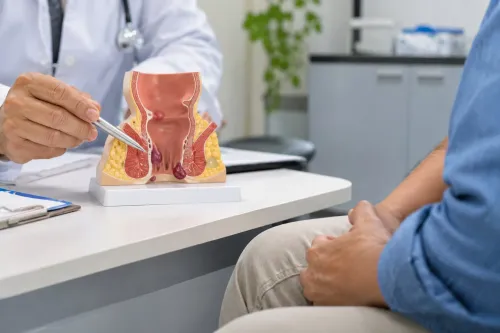
A safe TEP pathway starts with consultation and groin examination, then adds ultrasound or other imaging when the diagnosis or a recurrence is uncertain. The team reviews previous operations, medical conditions and medicines, optimises problems such as diabetes or blood pressure, and completes a pre-anaesthesia assessment.
You receive fasting instructions and consent for mesh repair, including possible conversion to TAPP or open surgery.
Before choosing a local surgeon and hospital, ask:
- Does the hernia surgeon in Pune regularly perform TEP for bilateral, femoral and recurrent hernias?
- Which mesh is planned, and how will it cover the defect?
- Is an anaesthetist available, with emergency support if bleeding or bowel injury occurs?
- What is the plan if a peritoneal tear prevents safe TEP dissection?
| Stage | What happens | What you should confirm |
|---|---|---|
| During TEP | General anaesthesia, three small port access points, preperitoneal dissection, sac reduction, groin-anatomy identification, mesh placement with overlap and access-site closure | A peritoneal tear may require repair or conversion to TAPP or open surgery |
| Recovery | Recovery-room observation followed by discharge when pain is controlled, you can urinate and walk, and medical conditions are stable | Ask who to contact for severe pain, fever or inability to pass urine |
| Follow-up | Wound, swelling, pain and recurrence checks | Confirm the appointment date and activity instructions |
A search for hernia surgery PCMC should not decide eligibility; location is not a safety standard. Dr Mahesh B Jadhav is one local consultation option for discussing anatomy, operative choices, anaesthesia risk and follow-up before booking TEP from a search phrase alone.
Related service
Surgical care ₹600 Laparoscopic hernia repair is a minimally invasive procedure used to treat inguinal, umbilical, ventral, incisional and selected recurrent hernias. View service → |
Frequently asked questions
What does TEP hernia repair treat?
TEP primarily treats inguinal and femoral hernias by placing mesh in the preperitoneal layer over the myopectineal orifice.
Who may be a suitable candidate for elective TEP repair?
Patients with suitable inguinal or femoral hernias and fitness for planned minimally invasive surgery may be considered after an examination and medical assessment.
When is TEP repair unsafe or unsuitable?
TEP may be unsuitable when the hernia requires urgent treatment, the patient cannot safely undergo anaesthesia, or prior surgery and scarring limit access to the preperitoneal space.
How does TEP compare with TAPP, open and robotic hernia repair?
TEP avoids deliberate entry into the abdominal cavity, while TAPP enters it; open and robotic repair use different access methods, risks, recovery patterns and resource requirements.
What happens during a TEP consultation in Pune or PCMC?
The consultation usually covers the hernia history, physical examination, prior operations, medical conditions, anaesthesia fitness, surgical options and recovery planning.
Keywords