Gallstones do not automatically mean you need gallbladder removal, and a robotic operation is not automatically better than conventional laparoscopy. By the end, you will know which conditions may need surgery, how doctors choose between robotic, laparoscopic and open approaches, and what to ask before treatment in Pune.
Key takeaways
- Confirm whether stones are in the gallbladder or common bile duct.
- Ask why robotic surgery is preferable to laparoscopic cholecystectomy for your case.
- Choose another approach when severe inflammation or bile duct injury risk changes the plan.
- Compare recovery time, complication risks and total hospital costs before deciding.
Which gallbladder problems may need robotic surgery?
Ultrasound usually confirms gallstones, but it does not prove that every stone needs surgery. Doctors combine your symptoms, examination, blood tests such as bilirubin, alkaline phosphatase and liver enzymes, and imaging. A stone inside the gallbladder differs from one lodged in the common bile duct.
Robotic cholecystectomy may be considered for symptomatic or complicated gallbladder disease, including:
- Repeated biliary pain caused by gallstones
- Acute cholecystitis, when inflammation causes persistent right-upper-abdominal pain, fever or vomiting
- Chronic cholecystitis with recurrent attacks
- Selected gallbladder polyps or other findings requiring removal
- Difficult anatomy, dense scarring or previous inflammation, where the surgeon believes robotic instrument control could help
| Finding | How doctors confirm it | Usual treatment direction |
|---|---|---|
| Gallbladder stones without symptoms | Ultrasound, with clinical assessment | Observation, not routine preventive removal |
| Suspected common-bile-duct stone | Liver tests, ultrasound, MRCP or endoscopic ultrasound | ERCP to clear a confirmed or high-probability duct stone, followed by gallbladder removal |
| Acute cholecystitis | Examination, blood tests and ultrasound | Prompt hospital treatment and often cholecystectomy |
| Pancreatitis, jaundice or bile-duct obstruction | Blood tests and imaging | Urgent specialist treatment; ERCP may come before surgery |
Seek urgent care for severe or lasting abdominal pain, fever, yellow skin or eyes, repeated vomiting, confusion, or dark urine with pale stools. Calling this simply gallbladder stone treatment in pune can hide the need for coordinated gastroenterology and surgical care.
How robotic and laparoscopic gallbladder removal compare
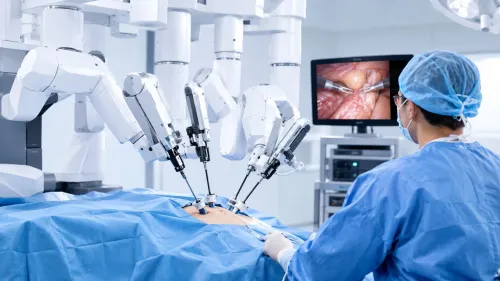
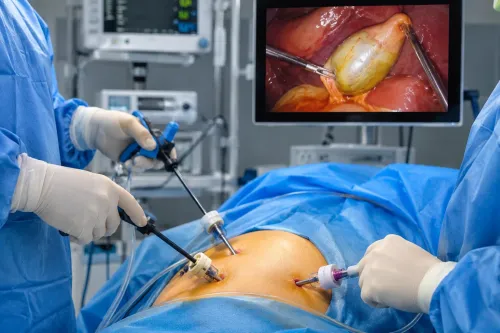
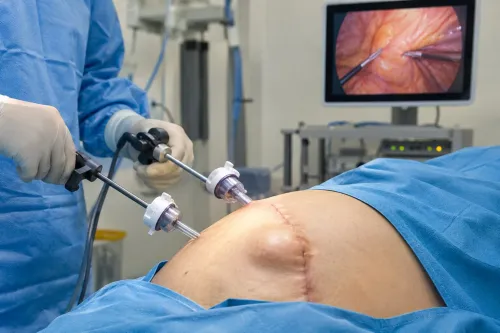
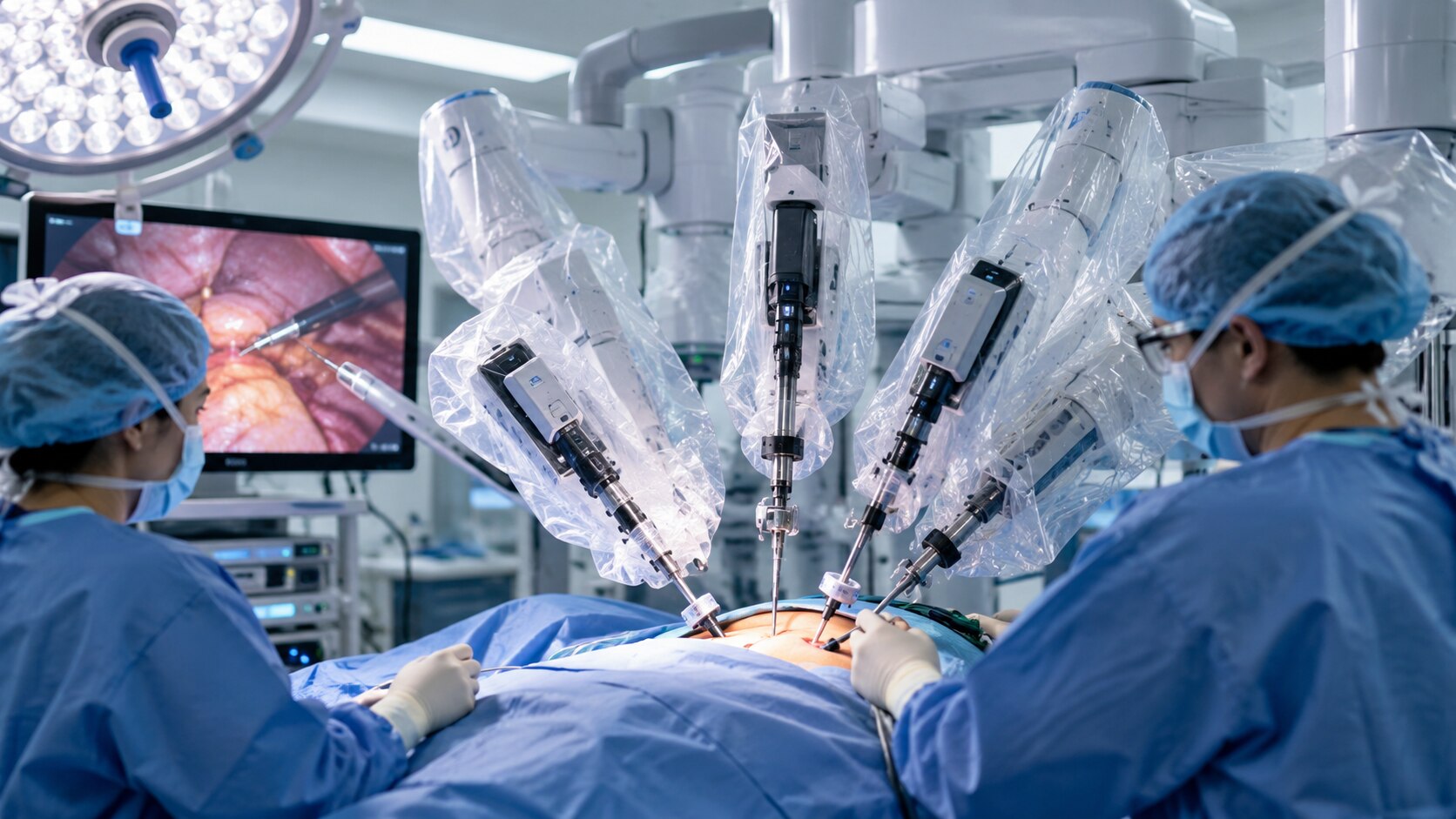
Robotic cholecystectomy uses general anaesthesia and several small abdominal ports, just like standard laparoscopy. The surgeon inserts a camera and instruments, sits at a console, and controls every movement; the robot does not diagnose, choose the dissection plane or operate independently.
The surgeon identifies the cystic duct and artery, obtains the critical view of safety, clips or seals those structures, separates the gallbladder, removes it through a port and closes the wounds.
| Feature | Robotic cholecystectomy | Laparoscopic cholecystectomy |
|---|---|---|
| Incisions | Several small ports, with placement planned for robotic arms and an assistant | Usually three or four small ports, including a camera port |
| Instrument control | Surgeon-controlled instruments with wrist-like movement and magnified 3D vision | Surgeon-controlled rigid instruments with 2D or 3D camera vision |
| Hospital stay and recovery | Usually similar for an uncomplicated case | Usually similar for an uncomplicated case |
| Operating time | Can be longer during setup, especially early in a team’s experience | Often efficient for routine cases |
| Cost and access | Higher cost and limited availability because a robotic system and trained team are needed | More widely available and usually less expensive |
Robotic surgery for gallbladder in Pune is a reasonable alternative when the surgeon expects difficult anatomy, wants enhanced instrument control, or has substantial robotic experience. It is not automatically safer or faster.
Ask who performs laparoscopic cholecystectomy in Pune, how the team handles unclear anatomy, and whether it will stop safely, use intraoperative imaging or convert to open surgery rather than divide an unidentified duct.
When another treatment or surgical approach is safer
A common-bile-duct stone changes the plan: ERCP may be needed to clear the duct before, during or after gallbladder removal. ERCP is not a substitute for removing a diseased gallbladder; many patients then need laparoscopic or robotic cholecystectomy to prevent further attacks. Ask whether gastroenterology and surgery teams have coordinated the sequence.
| Option | What it means | When it applies |
|---|---|---|
| Conventional laparoscopy | Small-port gallbladder removal using straight instruments | Routine symptomatic stones, uncomplicated cholecystitis, or when its lower cost, wider availability or shorter setup makes it the sensible choice |
| ERCP | An endoscope passes through the mouth to remove stones from the common bile duct | Jaundice, pancreatitis, cholangitis, or imaging that shows a duct stone; it does not remove the gallbladder |
| Open surgery | Gallbladder removal through a larger abdominal incision | Severe inflammation, dense scarring, uncontrolled bleeding, suspected cancer or anatomy that cannot be safely defined |
Robotic or conventional laparoscopic surgery must pause until the surgeon obtains the critical view of safety: the cystic duct and cystic artery must be clearly identified before division. If that view is unsafe, a subtotal cholecystectomy, fundus-first dissection, intraoperative imaging or conversion to open surgery protects against bile-duct injury.
Conversion is a safety decision, not automatically a failed operation. For gallbladder removal surgery in Pune, ask which bailout plan the surgeon uses and whether emergency open surgery, imaging and ERCP are available.
How to plan gallbladder surgery in Pune
Arrange the practical details before admission: bring ultrasound or MRCP/CT reports, blood-test results, medication names, allergy information and prior operation records. Ask when to stop eating, drinking or taking medicines such as warfarin, apixaban, aspirin and diabetes drugs; do not change them without instructions.
Plan an adult escort, transport home and at least several days away from work.
For gallbladder surgery in Pune, judge the hospital by its difficult-case plan, not by a robotic console. Ask these questions before booking:
- Who will operate, and how often do they manage acute inflammation, adhesions, bile-duct stones and emergency conversions?
- Is an anaesthetist and emergency operating team available overnight?
- Can the hospital provide urgent ultrasound, MRCP, CT and intraoperative bile-duct imaging?
- If a common-bile-duct stone appears, is ERCP available on site, with gastroenterology and surgery coordinating the sequence?
- What is the planned bailout if the critical view of safety cannot be obtained: subtotal cholecystectomy, fundus-first dissection, imaging or open conversion?
- What is included in the written estimate: surgeon, anaesthesia, robotic consumables, pathology, room, ERCP and possible extra nights?
| Question | Prepared answer | Why it matters |
|---|---|---|
| Emergency deterioration | Named 24-hour contact and operating access | Delays can worsen infection or obstruction |
| Difficult anatomy | Explicit bailout strategy | Safe completion matters more than robotic technique |
| Bile-duct stone | ERCP pathway and responsible specialist | One procedure may not solve both problems |
| After-hours complication | Direct review by the surgical team | Fever, jaundice or severe pain need prompt assessment |
Dr Mahesh B Jadhav can help you compare the planned robotic approach with conventional laparoscopy and explain which backup options apply to your scan findings.
Related services
Surgical Care ₹600 Robotic surgery is a minimally invasive technique used across many specialties. View service → |
Surgical Care Laparoscopic Gall Bladder Surgeries ₹600 we provide comprehensive laparoscopic care opd consultation..and further line of action from initial consultatation till discharge and post procedure... View service → |
Recovery, complications and the real cost of the decision
After uncomplicated robotic or laparoscopic gallbladder removal, discharge may be the same day or after one night. Expect shoulder-tip gas pain, abdominal soreness, fatigue and temporary bloating; walking helps, while heavy lifting waits until your surgeon clears it.
Desk work may take several days to two weeks. Physical work takes longer. Conversion to open surgery, a bile-duct procedure, severe inflammation or another medical condition can extend both hospital stay and time away from work.
Seek urgent medical review for:
- Fever, worsening abdominal pain, repeated vomiting or a red, draining wound
- Yellow eyes, dark urine or pale stools, which can indicate bile-duct obstruction or injury
- Faintness or increasing abdominal swelling, which can signal bleeding or another serious complication
- Persistent watery stools or inability to eat and drink
A bile leak, bleeding, wound infection, bile-duct injury or retained duct stone can require imaging, drainage, ERCP or another operation. Ask who pays for these treatments if they arise.
Compare the complete bill, not the robot label. A quote for gallbladder removal surgery in Pune should state surgeon and anaesthesia fees, operating-room charges, robotic consumables, room cost, medicines, pathology, tests and follow-up. Ask whether emergency conversion, ERCP and an extra hospital night are included.
The cheapest laparoscopic cholecystectomy in Pune is not the lowest-cost choice if delayed care or unpaid complications create more time off work. Choose the approach that matches the surgeon’s difficult-case experience, hospital support and your recovery priorities.
Frequently asked questions
Which gallbladder problems may need robotic surgery?
Robotic surgery may be considered for symptomatic gallstones, repeated gallbladder inflammation, gallbladder polyps, or selected complex cases. Your symptoms, examination, blood tests and imaging determine whether surgery is appropriate.
How does robotic gallbladder removal compare with laparoscopic cholecystectomy?
Both approaches remove the gallbladder through small incisions under general anaesthesia. Robotic surgery gives the surgeon articulated instruments and a magnified three-dimensional view, while laparoscopic surgery uses straight instruments and a two-dimensional view. The best choice depends on surgical complexity, expertise, safety and cost.
When is another treatment or surgical approach safer?
Endoscopic retrograde cholangiopancreatography may be needed for a stone in the common bile duct. Open surgery or a planned change from minimally invasive surgery may be safer with severe inflammation, dense scar tissue, bleeding or unclear anatomy.
How should you plan gallbladder surgery in Pune?
Ask about the diagnosis, required blood tests and imaging, surgical approach, surgeon and hospital experience, anaesthesia, admission, recovery restrictions, warning symptoms and the full estimated cost.
What affects recovery, complications and the cost of gallbladder surgery?
Recovery depends on the procedure, inflammation, general health and whether complications occur. Discuss pain, infection, bleeding, bile leakage, bile duct injury, conversion to open surgery, hospital stay, follow-up and charges for tests, medicines and readmission.
Keywords