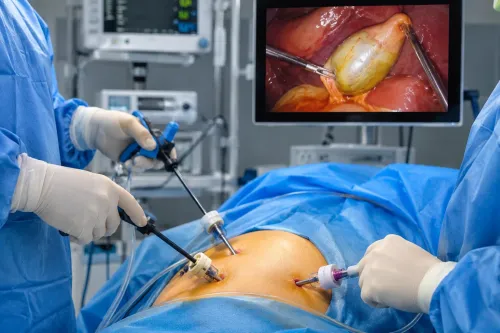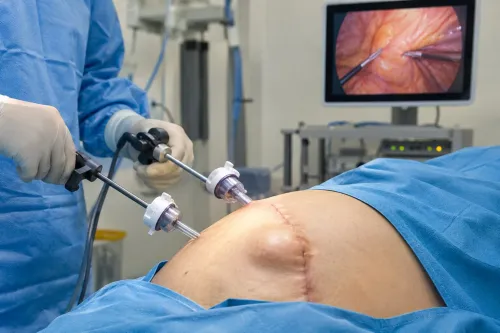

Robotic surgery is an operative approach, not a diagnosis, so the first task is identifying whether your gastrointestinal problem needs surgery at all. You will learn which symptoms require urgent assessment, which conditions may justify a robotic discussion, how surgeons compare robotic, laparoscopic and open treatment, and what to bring to a consultation.
Key takeaways
- Abdominal pain alone does not indicate robotic surgery.
- Seek urgent assessment for severe pain, vomiting, swelling, or inability to pass stool and gas.
- Ask how scans, examination, and medical history support the recommended operation.
- Compare robotic, laparoscopic, open surgery, and diagnostic laparoscopy for your specific problem.
Which gastrointestinal problems may justify a robotic surgery assessment?
Gastrointestinal robotic surgery in Pune may deserve assessment for selected colorectal disease, rectal operations, some gastric procedures, complex abdominal-wall or recurrent hernias, difficult adhesions and selected cancers. It is an operative approach, not a diagnosis: abdominal pain alone does not indicate robotic surgery.
The decision depends on the diagnosis, disease extent, anatomy, previous operations, urgency, surgeon experience and hospital resources. Ask whether conventional laparoscopy or open surgery is available as backup, because a robot does not make every abdominal operation appropriate or safer.
Wristed instruments and three-dimensional visualisation may support precise dissection or suturing in a confined pelvis. Operating time and cost can be higher than with conventional laparoscopy.
| Option | What it means | When it applies |
|---|---|---|
| Robotic surgery | Console-guided operation using wristed instruments | Selected colorectal, rectal, gastric, hernia, adhesion or cancer procedures |
| Conventional laparoscopy | Keyhole surgery with straight instruments | When the anatomy and disease can be treated effectively without robotic assistance |
| Open surgery | Direct access through a larger incision | Extensive disease, dense adhesions, emergencies or when conversion is safer |
| Endoscopy, medication or observation | Non-operative management or internal treatment | When surgery offers no clear benefit or the condition is not surgically treatable |
Other abdominal pathology belongs in this discussion only after imaging, endoscopy or examination identifies a condition surgery can treat. For gastrointestinal surgery in Pune, compare the proposed approach with its alternatives rather than choosing it because the word “robotic” sounds advanced.
Which warning signs require urgent assessment instead of a planned consultation?
Seek urgent medical assessment, not a planned robotic appointment, if abdominal symptoms are severe, worsening or accompanied by systemic illness. An intestinal obstruction blocks intestinal contents and can cause colicky pain, vomiting, distension and failure to pass gas; strangulation, ischaemia, perforation and sepsis can follow. Rapid examination and imaging are needed to identify these complications.
- Persistent or repeated vomiting
- Severe or increasing abdominal pain
- Marked abdominal distension
- Inability to pass stool or gas
- Fever, fainting, confusion or rapid breathing
- A rigid or very tender abdomen
- Blood in vomit or stool
- Dehydration signs: very little urine, dizziness or a dry mouth
| Condition | What it means | Pattern that helps distinguish it |
|---|---|---|
| Intestinal obstruction | A physical blockage stops intestinal contents moving | Vomiting, colicky pain, progressive distension and no gas; requires prompt examination and imaging |
| Ileus | Intestinal movement is reduced without a physical blockage | Diffuse sluggish bowel activity, often after illness, surgery or medicines |
| Constipation | Stools become infrequent or difficult to pass | Usually lacks progressive distension, repeated vomiting or severe colicky pain |
| Gastroenteritis | Infection or inflammation affects the stomach and bowel | Diarrhoea, vomiting and cramping are more typical |
An intestinal obstruction surgeon in Pune should assess suspected obstruction urgently rather than schedule a platform discussion. “Abdominal pain surgeon in Pune” is a search phrase, not a diagnosis; pain can arise from gastrointestinal, urinary, gynaecological, vascular, abdominal-wall, medication-related or metabolic causes.
How is suspected intestinal obstruction assessed and treated?
A suspected obstruction needs prompt assessment by an intestinal obstruction surgeon in Pune. The history covers when symptoms began, how pain, vomiting and distension progressed, previous abdominal operations, hernias, cancer history, medicines, and the last passage of stool or gas. Examination checks distension, tenderness, bowel sounds, dehydration and peritonitis.
Blood tests help measure severity and prepare for treatment:
- Complete blood count for infection, inflammation or blood loss.
- Electrolytes, kidney function and glucose to identify dehydration and metabolic disturbance.
- Lactate when ischemia is a concern.
- Group-and-save testing when an operation may be needed.
An erect abdominal X-ray can show dilated bowel and air-fluid levels. Contrast-enhanced CT is more useful for locating the transition point and detecting a closed loop, ischemia, perforation, tumour or another cause.
Selected adhesive obstruction without strangulation, ischemia, perforation or peritonitis may be treated initially with bowel rest, intravenous fluids, electrolyte correction and nasogastric decompression when indicated. Water-soluble contrast reaching the colon within the defined assessment interval, commonly 24 hours, can support continued observation. It must not delay surgery when examination or CT indicates an emergency.
Robotic surgery is not an automatic emergency choice in gastrointestinal surgery in Pune. Severe distension, contamination, unstable vital signs, necrotic bowel or dense adhesions may require open surgery or conversion for safety.
When is diagnostic laparoscopy the right next test for persistent abdominal symptoms?
Diagnostic laparoscopy in Pune is considered when significant symptoms persist after history, examination, blood tests and appropriate ultrasound, CT, MRI or endoscopy, and direct inspection could answer an important diagnostic question. It is not a routine replacement for imaging or endoscopy.
A surgeon may consider it when:
- Imaging remains inconclusive, but inspecting the abdomen could identify a cause, guide a biopsy or confirm that no surgical disease is present.
- Adhesions, endometriosis, an abdominal-wall problem or another treatable finding is suspected; the surgeon may release adhesions or treat the cause during the same operation when safe.
- A consultation with an abdominal pain surgeon in Pune has excluded urgent instability and non-surgical explanations, yet symptoms remain disabling or progressive.
Pain can arise from urinary, gynaecological, vascular, abdominal-wall, medication-related or metabolic conditions. Laparoscopy is the wrong next test when one of these has a clear explanation, urgent stabilisation is needed first, or a scan already shows a condition better managed by another specialist or procedure.
The operation carries risks of bleeding, infection, bowel or other organ injury, anaesthetic complications and trocar or abdominal-wall injury. Previous abdominal surgery, severe cardiopulmonary disease, coagulopathy, pregnancy or inability to tolerate pneumoperitoneum require individual assessment and can preclude the approach.
A planned operation should proceed only after its expected diagnostic or treatment benefit outweighs these risks.
How should you prepare for a gastrointestinal surgery consultation and compare options?
Bring a symptom timeline to your consultation: note vomiting, bowel movements, bleeding, weight change and fever, including dates and progression.
- Bring previous operation notes, scan images and reports, endoscopy reports, and biopsy reports.
- List every medicine, including anticoagulants, plus allergies, smoking, diabetes, heart disease, lung disease and any possibility of pregnancy.
The surgeon compares options against your exact diagnosis, urgency, anatomy, disease stage, anaesthetic risk and expected benefit—not the word “robotic” alone.
| Option | What it means | When it may fit |
|---|---|---|
| Medication or observation | Treats or monitors without an operation | Stable disease where surgery offers little added benefit |
| Endoscopy | Examines or treats through the digestive tract | Selected bleeding, blockage, polyp or early lesion |
| Conventional laparoscopy | Keyhole surgery with standard instruments | Suitable anatomy and planned abdominal treatment |
| Robotic surgery | Surgeon-controlled instruments with enhanced movement | Selected complex pelvic, colorectal or gastric operations |
| Open surgery | Direct access through a larger incision | Emergency, extensive disease, dense adhesions or unsafe minimally invasive access |
Ask what operation is proposed, what evidence supports it for your disease, and how often the surgeon performs it. Ask about conversion to open surgery, bleeding, bowel injury, anastomotic leak, non-operative alternatives, bowel preparation, recovery, and emergency backup, including intensive care and reoperation.
During a gastrointestinal surgery consultation in Pune, Dr Mahesh B Jadhav can help match findings to a safe plan. Gastrointestinal robotic surgery in Pune is not automatic or risk-free; the right choice may be robotic, laparoscopic, open, endoscopic, medical or observational.
Related service
Surgical Care ₹600 Robotic surgery is a minimally invasive technique used across many specialties. View service → |
Frequently asked questions
Which gastrointestinal problems may justify a robotic surgery assessment?
Selected colorectal and rectal conditions, some gastric procedures, complex or recurrent hernias, difficult adhesions, and selected cancers may justify assessment. Robotic surgery is an approach, not a diagnosis.
Which warning signs require urgent assessment instead of a planned consultation?
Seek urgent care for severe or worsening abdominal pain, repeated vomiting, marked swelling, fever with abdominal symptoms, blood in the stool or vomit, fainting, or inability to pass stool and gas.
How is suspected intestinal obstruction assessed and treated?
Assessment uses your symptoms, abdominal examination, blood tests, and imaging such as an abdominal CT scan. Treatment can include intravenous fluids, bowel rest, decompression, observation, or surgery when obstruction is complete, complicated, or does not resolve.
When is diagnostic laparoscopy the right next test for persistent abdominal symptoms?
Diagnostic laparoscopy may be considered when persistent symptoms remain unexplained after examination and non-invasive tests, and direct inspection of the abdomen could change treatment. Your surgeon must weigh its benefits, anaesthesia, and operative risks.
How should you prepare for a gastrointestinal surgery consultation and compare options?
Bring scan reports and images, medication and allergy lists, previous operation details, and a symptom timeline. Ask why surgery is recommended, which alternatives fit, what recovery involves, and why robotic, laparoscopic, open, or diagnostic laparoscopy is appropriate.
Keywords