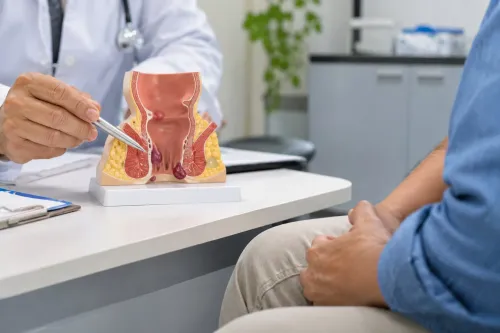
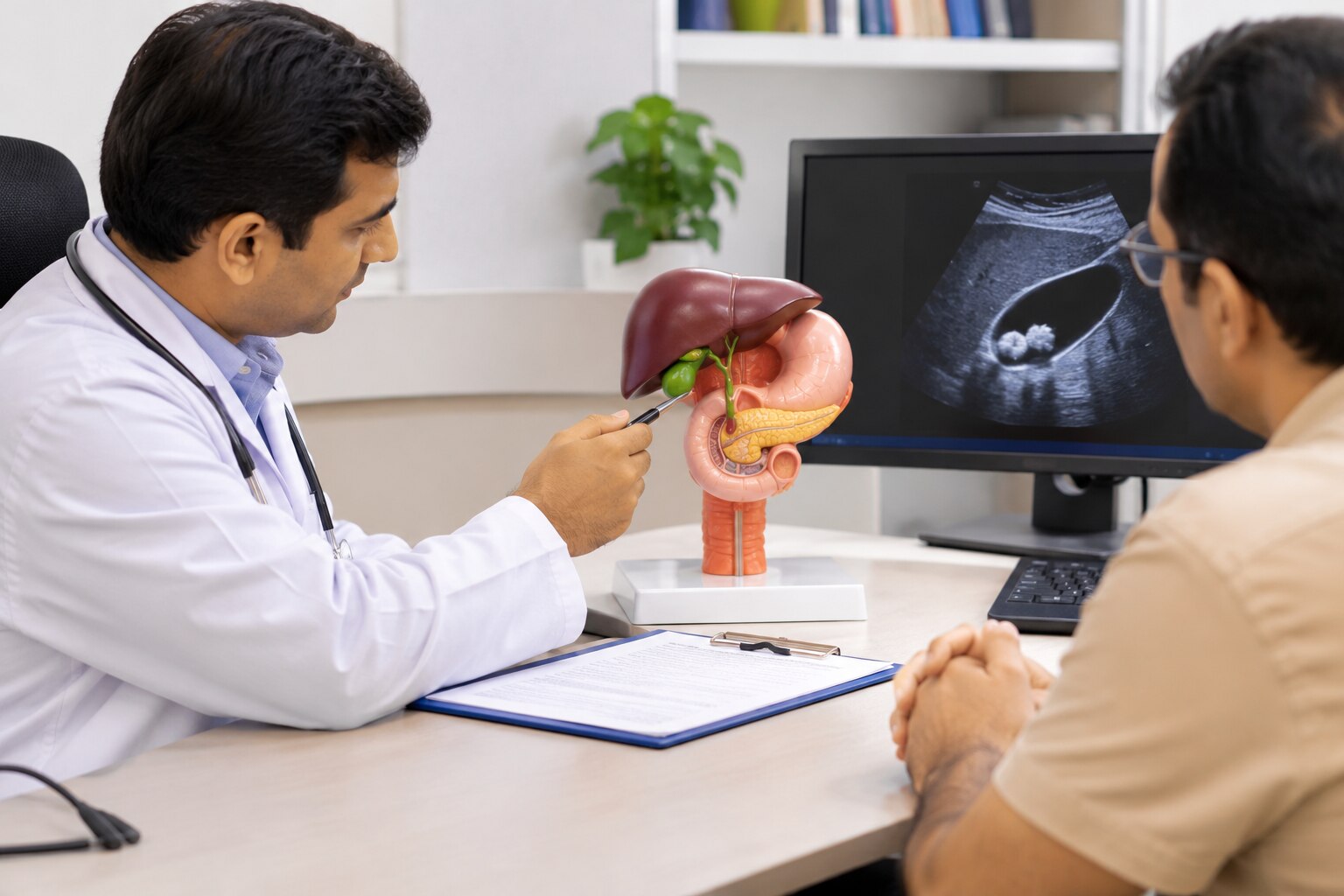
Pain near the anus and pain beneath the right ribs can feel like one abdominal problem, but they usually involve different organs and require different examinations. You will learn when a proctology OPD can begin the assessment, when you need a general surgeon, gastroenterologist or emergency department, and which tests distinguish gallbladder disease from anorectal conditions.
Key takeaways
- Confirm the OPD includes a general or gastrointestinal surgeon.
- Severe pain, fever, jaundice or repeated vomiting needs urgent assessment.
- Ultrasound is the usual first imaging test for suspected gallstones.
- Compare surgical experience, emergency access and follow-up before choosing care.
Can a proctology OPD assess pain that may come from the gallbladder?
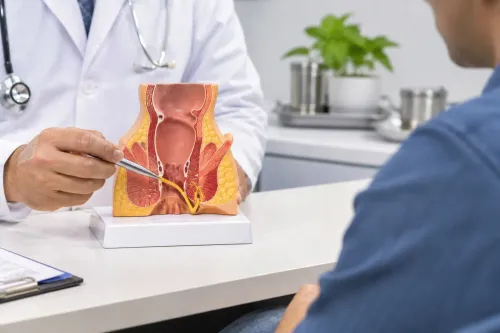
A proctology OPD can assess possible gallbladder pain when it is run by a general or gastrointestinal surgeon, but its primary purpose is treating the anus, rectum and lower bowel. That includes piles, fissure, fistula, anal pain, itching, lumps and discharge. A search for “proctology OPD in Pune” does not confirm gallbladder expertise.
Gallbladder pain occurs higher in the abdomen: steady or cramping pain beneath the right ribs or in the upper middle abdomen, often after a meal, sometimes spreading to the back or right shoulder. Nausea or vomiting can accompany it.
Gallstones do not explain bright-red bleeding from the anus, while piles do not explain jaundice or typical right-upper-abdominal biliary pain. Both conditions can exist together.
At the consultation, expect this sequence:
1. The clinician asks where the pain starts, when it began, how long it lasts, whether food triggers it, and whether it spreads to your back or shoulder. Tell them about vomiting, fever, jaundice, bowel symptoms and rectal bleeding.
2. The examination may focus on your abdomen rather than the rectum when pain lies under the right ribs. The clinician can order initial blood tests or an ultrasound and assess whether another service is needed.
3. Confirm the doctor’s actual scope before booking a gallbladder proctology OPD in Pune. A proctology OPD in Pune may provide the right first surgical assessment, but severe pain, fever, vomiting or jaundice requires urgent medical care.
What happens when you arrive with abdominal pain?
The clinician first separates anorectal symptoms from upper-abdominal symptoms. A proctology OPD in Pune is designed mainly for the anus, rectum and lower bowel, so pain beneath the ribs needs a broader assessment.
1. Expect questions about the exact location, onset, duration and severity of pain; whether food triggers it; and whether it spreads to your back or shoulder. Report nausea, vomiting, fever, chills, dark urine, pale stools, yellow eyes, bowel-movement changes and rectal bleeding.
2. Tell the clinician about previous abdominal surgery, any possibility of pregnancy and medicines such as blood thinners. A tender lump, fissure, fistula opening or blood on examination points toward an anorectal assessment.
3. Right-upper-abdominal tenderness, guarding, abdominal distension or pain with movement calls for an abdominal examination instead of, or before, a rectal examination. Do not let a known history of piles end the assessment when the pain is beneath the ribs.
4. If symptoms suggest disease of the liver, gallbladder, pancreas or bile ducts, the clinician may recommend a general surgeon or gastroenterologist. If the doctor’s practice is limited to proctology, ask where abdominal evaluation, blood tests and ultrasound imaging will be arranged.
Persistent severe pain, repeated vomiting, fever with chills or jaundice needs urgent medical care rather than a routine proctology appointment.
Which tests investigate suspected gallbladder disease?
Start with a right-upper-quadrant abdominal ultrasound, the usual first imaging test for suspected gallbladder disease. Ask whether the report describes gallstones, gallbladder-wall thickening, pericholecystic fluid, a distended gallbladder, tenderness when the probe presses over the gallbladder, and the common bile duct diameter.
- Request liver-function tests, serum bilirubin and a complete blood count. Raised bilirubin or abnormal liver enzymes increase concern about a bile-duct stone; a raised white-cell count supports infection when it matches pain, fever or tenderness.
- Add a lipase test when pancreatitis is possible.
- Do not assume that every ultrasound finding requires surgery. Stones without characteristic attacks may be incidental and do not automatically call for gallbladder removal.
| Test or result | What it helps investigate | When it may be used |
|---|---|---|
| Repeat ultrasound | A missed or evolving gallbladder abnormality | The first scan is normal but symptoms remain concerning |
| CT or MRI/MRCP | Complications, bile-duct stones or another abdominal cause | Ultrasound does not explain the clinical picture |
| Hepatobiliary scintigraphy | Gallbladder filling and drainage | Suspected inflammation or dysfunction remains unclear |
The appointment label does not determine the test; your symptom pattern, examination and results do. A search for gallbladder stone treatment in pune should lead to a clinician who interprets imaging alongside symptoms, rather than recommending treatment from the word “stones” alone.
When should you skip a routine OPD appointment?
Do not wait for a routine proctology appointment if you have jaundice, dark urine with abdominal pain, persistent vomiting, or high fever with chills or rigors. These findings can indicate acute cholecystitis, a common-bile-duct stone, cholangitis, pancreatitis, sepsis or another emergency.
- Go to an emergency department for severe or worsening right-upper-abdominal pain.
- Seek urgent care if you faint, become confused, or develop pain with a rigid abdomen.
- Do not wait for an OPD appointment when you cannot keep fluids down, or your abdomen becomes hard and very tender.
Pain after eating does not prove gallstones. Reflux, peptic ulcer disease, pancreatitis, liver disease, kidney stones, bowel disorders, and heart or lung conditions can cause similar pain. A concurrent gallbladder problem can still exist, so do not assign every symptom to one diagnosis.
Rectal bleeding points to an anorectal or lower-bowel cause and needs its own assessment, although it does not exclude gallbladder disease. If you search for a proctology OPD in Pune or gallbladder stone treatment in Pune, use the result to arrange appropriate triage—not to delay emergency care.
How do you choose the right gallbladder consultation in Pune or PCMC?
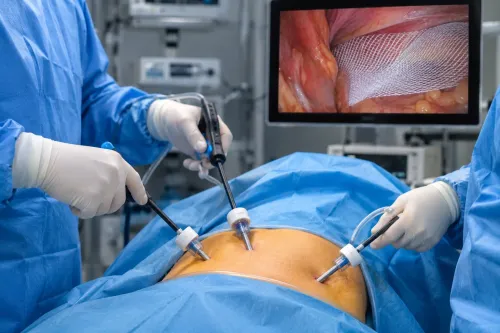
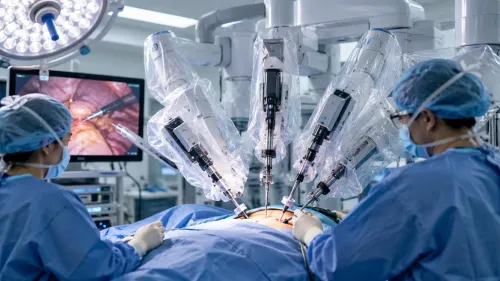
Choose a consultation that links your symptoms, examination, blood tests and imaging instead of treating an ultrasound report in isolation. Confirm that the surgeon is trained in laparoscopic biliary surgery and can arrange imaging, laboratory coordination and emergency referral.
For symptomatic gallstones, ask whether laparoscopic cholecystectomy is appropriate and how the surgeon manages severe inflammation, dense adhesions, bleeding, unclear anatomy or conversion to open surgery. A promise that every operation remains laparoscopic is not realistic.
If the common bile duct is dilated or blood tests suggest obstruction, ask which investigation or procedure applies:
| Test or procedure | What it does | When it matters |
|---|---|---|
| MRCP | Maps the bile ducts using MRI | Suspected duct stone or obstruction |
| Endoscopic ultrasound | Looks closely for small stones | Ultrasound or blood tests are inconclusive |
| ERCP | Clears duct stones through an endoscope | A confirmed or strongly suspected obstructing duct stone |
| Laparoscopic cholecystectomy | Removes the gallbladder | Symptomatic gallstones after assessing duct status |
ERCP is not gallbladder removal. A duct stone may require endoscopic clearance followed by cholecystectomy.
Ask about bile leak, bleeding, infection, bile-duct injury, retained stones, further procedures and post-operative bowel changes. Dr Mahesh B Jadhav’s general and advanced laparoscopic surgical consultation can help link an initial proctology visit to abdominal assessment, testing and a treatment plan.
Search terms such as gallbladder surgery in Pune and gallstone surgeon PCMC are starting points, not qualifications.
Related services
Surgical Care Laparoscopic Gall Bladder Surgeries ₹600 we provide comprehensive laparoscopic care opd consultation..and further line of action from initial consultatation till discharge and post procedure... View service → |
Piles Fissure Fistula Pilonidal Sinus ₹600 we provide comprehensive consultation for pile,fissure and fistula treatment View service → |
Frequently asked questions
Can a proctology OPD assess pain that may come from the gallbladder?
Yes, if the OPD is run by a general or gastrointestinal surgeon. Proctology focuses on the anus, rectum and lower bowel, so confirm gallbladder expertise before booking.
What happens when you arrive with abdominal pain?
The surgeon reviews your pain location, timing, meals, vomiting, fever, jaundice, bowel symptoms, medicines and medical history, then examines your abdomen and decides whether tests or urgent referral are needed.
Which tests investigate suspected gallbladder disease?
Evaluation commonly includes liver function tests, a complete blood count and an abdominal ultrasound. The surgeon may order additional imaging when ultrasound findings or symptoms require clarification.
When should you skip a routine OPD appointment?
Seek urgent medical care for severe or persistent abdominal pain, fever with chills, yellow skin or eyes, repeated vomiting, fainting, confusion or a rigid abdomen.
How do you choose the right gallbladder consultation in Pune or PCMC?
Choose a service that offers general surgical assessment, gallstone treatment, access to ultrasound and laboratory testing, emergency escalation, and clear follow-up for possible gallbladder surgery in Pune or PCMC.
Keywords